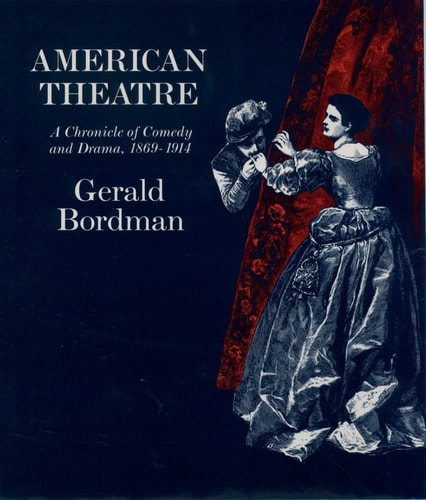
American Theatre: A Chronicle of Comedy and Drama: 1869-1914
0
0
As an Amazon Associate and affiliate partner, Menrva Books earns from qualifying purchases. Learn more
Author Description
This three-volume work will accomplish for the American non-musical theatre what Bordman's American Musical Theatre did for our song-and-dance entertainments: it chronicles, in order by opening, every Broadway comedy and drama, show by show, season by season, offering a plot synopsis, principal players, and important statistics. Scenery and costumes are described where they might be of interest, and comments of the plays' contemporary critics are quoted. In many instances, extended excerpts from the play are included to give the reader a fuller understanding of its nuances and its period dialogue. Also included, and worked chronologically into the text, are details about cheap-priced, cliff-hanging melodramas, such as Bertha, the Sewing Machine Girl and His Sister's Shame, which were among America's most popular diversions in theatres catering to blue-collar playgoers until silent films drew away their audiences. Examples of shows produced and designed for other than New York are included.This volume deals with the great expansion of American theatre after the Civil War, the careers of such prominent actors and actresses as Edwin Booth, Mrs. Fiske, the Drew and Barrymore families, the first important American playwrights like Clyde Fitch, producers like David Belasco, and the influence of foreign plays and players. This stage history, besides giving a sense of each production, touches on the literary worth of the plays, provides brief biographies of major figures, and sets all of this against the economic and social backgrounds of the time. Readers will close the book feeling they, like their parents and grandparents, have sat through performances of these shows of another era.
Menrva's Summary
THE THESIS
This work investigates the evolution and cultural impact of American non-musical theatre during the period of rapid expansion following the Civil War. Gerald Bordman, a respected historian of the American stage, utilizes a chronological framework to document the development of Broadway comedies and dramas from 1869 to 1914. By synthesizing production statistics, critical reception, and biographical data, the author provides a comprehensive record of the plays and personalities that defined the era's theatrical landscape.
THE SCOPE MAP
What You Will Find
- A season-by-season chronicle of Broadway comedies and dramas including plot synopses and cast lists.
- Detailed analysis of the influence of prominent figures such as Edwin Booth, David Belasco, and the Barrymore family.
- Examination of diverse theatrical forms, ranging from high-brow productions to popular blue-collar melodramas.
- Contextual data regarding the economic and social conditions that shaped American playwriting and performance styles.
THE AUTHORITY PERSPECTIVE
Scholars and theater historians frequently cite this work as a foundational reference for understanding the transition of American drama in the late nineteenth and early twentieth centuries. The text is noted for its meticulous archival detail and its ability to place individual productions within the broader context of American cultural history.
Page Count:
808
Publication Date:
1994-01-06
Publisher:
Oxford University Press
ISBN-10:
0195037642
ISBN-13:
9780195037647
History
United States
American History
Theater
Reference
Community Tags
Similar Books