Screening in Chronic Disease
0
0
As an Amazon Associate and affiliate partner, Menrva Books earns from qualifying purchases. Learn more
Author Description
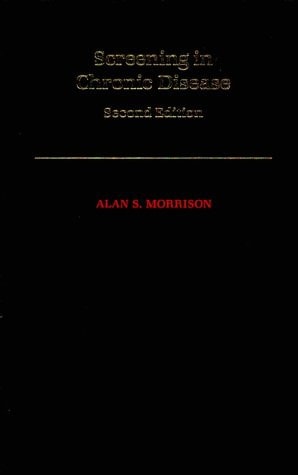
This timely book presents the epidemiologic methods that can be used to determine when screening procedures are indicated, focusing on how to describe and measure changes in the natural history of disease brought on by early treatment, lead time, and prognostic selection. The author explains how to assess the usefulness of screening in reducing morbidity and mortality, and provides thorough descriptions of the experimental and case-control approaches. "An intelligent account of the role screening can play in detecting disease... replete with figures and tables with examples of the pros and cons of different screening tests." --Journal of the American Medical Association
Menrva's Summary
THE THESIS
This text investigates the methodological framework required to evaluate the efficacy and clinical utility of screening programs for chronic diseases. Alan S. Morrison, an expert in epidemiological research, synthesizes complex statistical concepts to determine when screening procedures are indicated. The book provides a rigorous examination of how early intervention alters the natural history of disease, specifically addressing the impacts of lead time and prognostic selection on patient outcomes.
THE SCOPE MAP
What You Will Find
- Epidemiological methods for assessing screening procedure indications
- Quantitative analysis of lead time and prognostic selection
- Experimental and case-control study design approaches
- Metrics for measuring morbidity and mortality reduction
THE AUTHORITY PERSPECTIVE
Experts and medical professionals frequently cite this work as a foundational text for understanding the statistical rigor required in screening evaluations. Readers often note the academic density of the prose, which serves as a comprehensive reference for researchers and public health practitioners.
Page Count:
192
Publication Date:
1985-02-28
Publisher:
Oxford University Press
ISBN-10:
0195035054
ISBN-13:
9780195035056
Chronic Disease
Public Health
Medicine
Biostatistics
Epidemiology
Community Tags
Similar Books