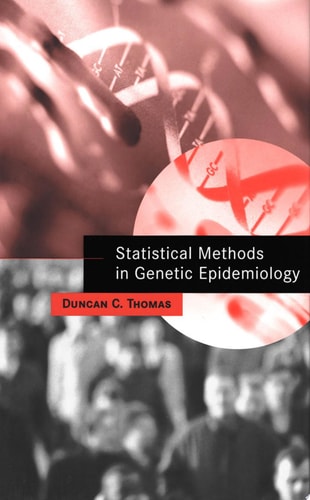
Statistical Methods in Genetic Epidemiology
0
0
As an Amazon Associate and affiliate partner, Menrva Books earns from qualifying purchases. Learn more
Author Description
This well-organized and clearly written text has a unique focus on methods of identifying the joint effects of genes and environment on disease patterns. It follows the natural sequence of research, taking readers through the study designs and statistical analysis techniques for determining whether a trait runs in families, testing hypotheses about whether a familial tendency is due to genetic or environmental factors or both, estimating the parameters of a genetic model, localizing and ultimately isolating the responsible genes, and finally characterizing their effects in the population. Examples from the literature on the genetic epidemiology of breast and colorectal cancer, among other diseases, illustrate this process. Although the book is oriented primarily towards graduate students in epidemiology, biostatistics and human genetics, it will also serve as a comprehensive reference work for researchers. Introductory chapters on molecular biology, Mendelian genetics, epidemiology, statistics, and population genetics will help make the book accessible to those coming from one of these fields without a background in the others. It strikes a good balance between epidemiologic study designs and statistical methods of data analysis.
Menrva's Summary
THE THESIS
This text investigates the methodological framework required to identify and quantify the joint effects of genetic and environmental factors on disease patterns within populations. Duncan C. Thomas, a recognized expert in the field, synthesizes complex concepts from molecular biology, Mendelian genetics, and biostatistics to provide a structured approach to genetic epidemiology. The book argues that a systematic progression—from identifying familial traits to isolating specific genes—is essential for understanding disease etiology and population health.
THE SCOPE MAP
What You Will Find
- Methodologies for study design and statistical analysis in genetic research.
- Techniques for distinguishing between genetic and environmental contributions to disease.
- Practical applications using case studies from breast and colorectal cancer literature.
- Introductory foundations in molecular biology, population genetics, and epidemiology.
THE AUTHORITY PERSPECTIVE
Experts and graduate students frequently cite this work as a foundational reference for bridging the gap between epidemiologic study design and rigorous statistical analysis. The text is noted for its accessibility to researchers entering the field from diverse disciplinary backgrounds.
Page Count:
464
Publication Date:
2004-01-29
Publisher:
Oxford University Press
ISBN-10:
019515939X
ISBN-13:
9780195159394
Science
Biostatistics
Epidemiology
Reference
Medicine
Genetics
Community Tags
Other Editions(3)

Similar Books