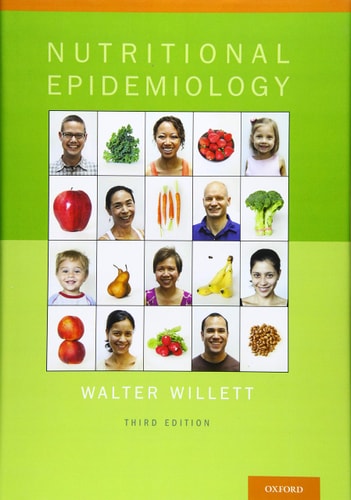
Nutritional Epidemiology
0
0
As an Amazon Associate and affiliate partner, Menrva Books earns from qualifying purchases. Learn more
Author Description
This book discusses the complex relationships between diet and major diseases of western civilization, such as cancer and atherosclerosis. It begins with an overview of research strategies in nutritional epidemiology, a relatively new discipline that combines the body of detailed knowledge gained by nutritionists in this century with methodologic approaches developed by epidemiologists to study determinants of diseases with multiple etiologies and long latent periods. Learning about the effects of diet begins with its measurement, thus a major part of the book is devoted to methods of dietary assessment using data on food intake, biochemical indicators of diet, and measures of body size and composition. The reproducibility and validity of evidence from each approach and the implications of measurement error are considered in detail. The analysis, presentation, and interpretation of data from epidemiologic studies of diet and disease are discussed; particular attention is given to the influence of total energy intake on the findings of these studies. Comprehensive and in-depth, this is an indispensable text for epidemiologists, nutritionists, and their students.
Menrva's Summary
THE THESIS
This text investigates the methodological challenges and scientific frameworks required to accurately quantify the relationship between dietary intake and the development of chronic diseases. Walter Willett, a prominent researcher in the field, synthesizes decades of nutritional science and epidemiological practice to provide a rigorous approach to studying diet-disease associations. The book establishes a systematic framework for evaluating long-term health outcomes, emphasizing the necessity of precise measurement in complex biological systems.
THE SCOPE MAP
What You Will Find
- Methodologies for dietary assessment including food frequency questionnaires and biochemical markers.
- Statistical frameworks for analyzing the impact of total energy intake on disease outcomes.
- Evaluation of validity and reproducibility in longitudinal nutritional studies.
- Analysis of the etiology of major chronic conditions such as cancer and atherosclerosis.
THE AUTHORITY PERSPECTIVE
Experts recognize this work as a foundational text for students and professionals in public health and clinical nutrition. Readers frequently note the technical density of the prose, which serves as a standard reference for designing and interpreting epidemiologic research.
Page Count:
416
Publication Date:
1989-11-30
Publisher:
Oxford University Press
ISBN-10:
0195045017
ISBN-13:
9780195045017
Science
Public Health
Nutrition
Biostatistics
Nutrition research
Epidemiology
Medicine