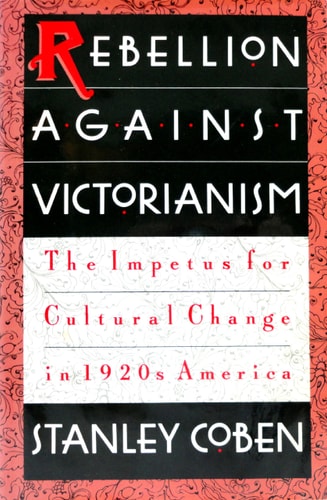
Rebellion Against Victorianism: The Impetus for Cultural Change in 1920s America
0
0
As an Amazon Associate and affiliate partner, Menrva Books earns from qualifying purchases. Learn more
Author Description
The 1920s in America was a decade of rebellion, reform, and reaction as traditional Victorian values came under attack from all sides. Black leaders like W.E.B. Du Bois and Marcus Garvey, feminists like Alice Paul, politicians like Robert La Follette, and social scientists like Franz Boas and Margaret Mead all assaulted fundamental inequalities inherited from the nineteenth century. A host of scientific breakthroughs eroded the foundations of the older world view, and cultural innovations like jazz challenged the nineteenth-century morality of most middle class Americans and also provoked spirited defenses of tradition by extremists like the Ku Klux Klan.In this wide-ranging and vividly written book, Stanley Coben introduces a new hypothesis about the reasons for the tumultuous cultural changes during the 1920s. He begins with the Victorian concept of "character," the word which assured Americans of the late nineteenth and early twentieth centuries that men were men, women were wives and mothers, and homes were sanctuaries. (Harriet Beecher Stowe and her sister Catherine wrote that "She who is the mother and housekeeper in a large family is the sovereign of an empire.") Coben doesn't spare us the seamy underside of the Victorian ideal either, such as the racism revealed by the Oxford professor who declared to an approving American audience in 1882 that "the best remedy for whatever is amiss in America would be if every Irishman should kill a negro and be hanged for it." Nor does he hesitate to describe the failures of those who rebelled against tradition, like the early supporters of the Equal Rights Amendment, or the farmer-labor-progressive presidential coalition of 1924. Rebellion Against Victorianism is particularly enlightening on cultural matters, showing how artforms of the '20s--like jazz or the novels of Ernest Hemingway and Sinclair Lewis--were part of the rebellion. The book includes a fascinating chapter-length discussion of the Ku Klux Klan which reveal
Menrva's Summary
THE THESIS
This work investigates the underlying causes of the cultural upheaval in 1920s America, specifically focusing on the systematic dismantling of Victorian-era moral and social frameworks. Stanley Coben, a historian specializing in American social and cultural evolution, utilizes a synthesis of political, scientific, and artistic developments to argue that the decade was defined by a fundamental conflict between traditionalist values and emerging modern identities. By examining the roles of diverse figures ranging from civil rights leaders to social scientists, the author constructs a framework that explains how the collapse of the Victorian concept of 'character' facilitated a period of intense national transformation.
THE SCOPE MAP
What You Will Find
- Analysis of the Victorian concept of character and its influence on gender roles and domestic life.
- Examination of the impact of scientific breakthroughs and cultural innovations like jazz on traditional morality.
- Case studies of political and social movements, including the early Equal Rights Amendment supporters and the Ku Klux Klan.
- Evaluation of the literary contributions of figures such as Ernest Hemingway and Sinclair Lewis as instruments of cultural rebellion.
THE AUTHORITY PERSPECTIVE
Historians and scholars frequently cite this work for its comprehensive approach to the intersection of social reform and cultural change during the interwar period. The text is noted for its accessible prose style, making it a valuable resource for both academic researchers and general readers interested in the complexities of 1920s American society.
Page Count:
256
Publication Date:
1991-03-14
Publisher:
Oxford University Press
ISBN-10:
0195045939
ISBN-13:
9780195045932
History
Social History
United States
American History
Cultural History
Community Tags
Similar Books














