The Limits of Science
0
0
As an Amazon Associate and affiliate partner, Menrva Books earns from qualifying purchases. Learn more
Author Description
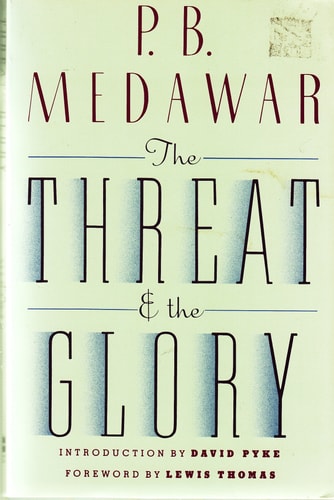
"Science," writes Sir Peter Medawar, "is incomparably the most successful enterprise human beings have ever engaged upon." In this brief, brilliant book the Nobel laureate explores the nature and limitations of scientific pursuit. The three essays included touch on some of the largest questions known to man: Can science determine the existence of God? Is there one "scientific method" by which all the secrets of the universe can be discovered?In "An Essay on Scians" (an early spelling of "science"), Medawar examines the process of scientific inquiry. Debunking the common belief that science is inductively structured, he claims that great leaps of imagination are required to determine the laws of nature and likens the process of scientific hypothesis to the creative acts of poets and artists. The question posed in "Can Scientific Discovery Be Premeditated?" is answered with a firm no. Sir Peter stresses the role of luck in the history of science and cites as examples of un-premeditated discoveries those of X-rays, HLA polymorphism, and the nature of the disease myasthenia gravis. In the title essay, Medawar distinguishes between "transcendent" questions, which are better left to religion, literature, and metaphysics, and questions about the organization and structure of the material universe. With regard to the latter, he concludes, there are no limits to the possibilities of scientific achievement. "This is science's greatest glory," writes Medawar, "for it entails that everything which is possible in principle can be done if the intention to do it is sufficiently resolute and long sustained."
Menrva's Summary
THE THESIS
Can science provide a comprehensive explanation for all human questions, or are there inherent boundaries to the scientific method? Sir Peter Medawar, a Nobel laureate in Physiology or Medicine, utilizes his extensive background in biological research to examine the philosophical underpinnings of scientific inquiry. He argues that while science is the most successful human enterprise, it must be distinguished from metaphysical or religious pursuits to maintain its integrity and effectiveness.
THE SCOPE MAP
What You Will Find
- Analysis of the scientific method and the role of creative imagination in hypothesis formation.
- Examination of the role of serendipity and luck in historical scientific breakthroughs.
- Distinction between transcendent questions and material, empirical inquiries.
- Discussion on the limits of scientific achievement regarding the structure of the universe.
THE AUTHORITY PERSPECTIVE
Experts and readers alike view this collection as a concise, foundational text for understanding the philosophy of science. The prose is noted for its clarity and intellectual rigor, making complex epistemological questions accessible to a general audience.
Page Count:
128
Publication Date:
1988-01-14
Publisher:
Oxford University Press
ISBN-10:
0195052129
ISBN-13:
9780195052121
Non-Fiction
Science
Science
Essays
Community Tags
Similar Books