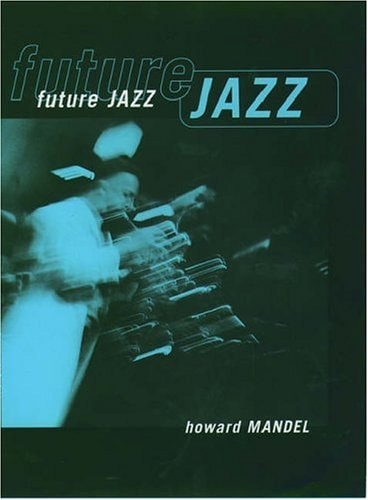
Future Jazz
0
0
As an Amazon Associate and affiliate partner, Menrva Books earns from qualifying purchases. Learn more
Author Description
Jazz has always been an experimental art form, pushing the boundaries of the mainstream, searching for the new. As Howard Mandel reveals in Future Jazz, jazz today is still reaching out in exciting new directions.In a series of vividly drawn portraits and intimate, in-depth interviews with musicians, composers, experimenters, and club owners, Mandel captures the vitality and the passion of the modern jazz scene, from the 1970s to the present. The most successful jazz players of recent years have been the so-called Young Lions, and Mandel includes three extensive interviews with the Lion King himself, Wynton Marsalis, who shares his philosophy of jazz and his pointed opinions on the contemporary scene. But most of the book focuses on the more experimental and avant garde trends. The book traces the development of some of the dominant new jazz groups--talking to Lester Bowie of the Art Ensemble of Chicago and to members of the World Saxophone Quartet--and examines the work of a range of major jazz figures such as David Murray, Henry Threadgill, Joe Lovano, Geri Allen, and singer Cassandra Wilson. And in a great departure from other jazz books, Mandel examines the powerful influence of rock on jazz. He chats with guitarist John McLaughlin, whose groundbreaking collaboration with Miles Davis set off the fusion revolution, and probes the inventive ideas of other jazz musicians with roots in gospel, blues, and soul, such as George Benson and James "Blood" Ulmer.Ranging from the Knitting Factory to Lincoln Center, Future Jazz is an indispensable guide to today's scene and a valuable roadmap to the music of tomorrow.
Menrva's Summary
THE THESIS
How does the evolution of jazz from the 1970s to the present reflect the genre's inherent drive toward experimentation and cultural synthesis? Howard Mandel, a veteran music journalist, utilizes a series of intimate interviews and profiles to argue that modern jazz remains a vibrant, shifting landscape defined by its avant-garde tendencies and its willingness to incorporate influences from rock, blues, and soul. By documenting the perspectives of both established icons and experimental innovators, the author maps the transition of the genre from traditional roots to contemporary fusion and beyond.
THE SCOPE MAP
What You Will Find
- Detailed profiles and interviews with key figures such as Wynton Marsalis, Lester Bowie, and Cassandra Wilson.
- Analysis of the influence of rock, gospel, and soul on the development of jazz fusion.
- Examination of institutional shifts in the jazz scene, ranging from the Knitting Factory to Lincoln Center.
- Historical documentation of the rise of the Young Lions movement and the avant-garde experimentalism of the late 20th century.
THE AUTHORITY PERSPECTIVE
Critics and music historians frequently cite this work as a comprehensive survey of the late 20th-century jazz landscape. The text is noted for its accessible journalistic style, making it a useful resource for readers seeking to understand the intersection of traditional jazz and modern experimentalism.
Page Count:
256
Publication Date:
1999-07-08
Publisher:
Oxford University Press
ISBN-10:
0195063783
ISBN-13:
9780195063783
Music
Biography
Non-Fiction
Jazz musicians
Music History
Jazz