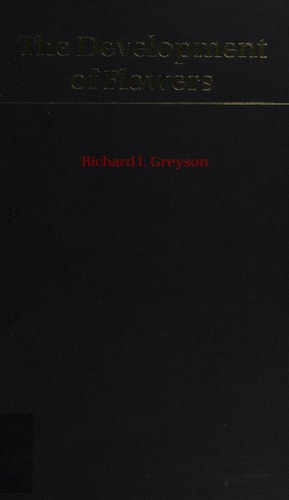
The Development of Flowers
0
0
As an Amazon Associate and affiliate partner, Menrva Books earns from qualifying purchases. Learn more
Author Description
This unique volume presents a developmental view of the flower and its organs in contrast with more traditional treatments of phylogeny and comparative morphology. Individual chapters on the perianth, androecium, and gynoecium explore the flower's four organ types from the perspectives of organ initiation from the floral meristem, and organ growth, differentiation, maturation and function. The many illustrations highlight potential candidates as "model systems." Also explored are the developmental aspects of inflorescences and the flowers of grasses, highlighting flower and inflorescence development in Zea, Triticum, Orqza, and Lolium. The book concludes with a discussion of the partial processes and components of flower development which might be considered as sources of morphogenetic and developmental control. In addition to the critical genetic components, the roles of plant growth substances, organelles, and microtubules and microfibrilar components of wall placement are reviewed. The author persuasively argues that flower development is best interpreted as a multidimensional, interactive process in which many potential points for control of individual minor reactions can be identified. This book is a must for researchers and students in botany, plant molecular biology, and plant physiology.
Menrva's Summary
THE THESIS
This volume investigates the developmental processes of floral organs, arguing that flower formation is a multidimensional, interactive system rather than a static morphological outcome. Richard I. Greyson, an established authority in botanical sciences, synthesizes data from organ initiation, growth, and maturation to challenge traditional phylogenetic perspectives. By examining the perianth, androecium, and gynoecium, the author provides a framework for understanding how genetic and physiological components govern the development of floral structures.
THE SCOPE MAP
What You Will Find
- Detailed analysis of floral organ initiation from the floral meristem.
- Comparative study of inflorescence development in cereal crops like Zea, Triticum, and Oryza.
- Examination of the roles played by plant growth substances, organelles, and microtubules in cell wall placement.
- Identification of potential model systems for future morphogenetic research.
THE AUTHORITY PERSPECTIVE
Experts and researchers in plant biology recognize this text as a comprehensive reference for understanding the mechanics of floral development. The prose maintains a high level of technical density, making it a standard resource for advanced students and professionals in the field of botany.
Page Count:
330
Publication Date:
1994-04-21
Publisher:
Oxford University Press
ISBN-10:
019506688X
ISBN-13:
9780195066883
Science
Flowers
Botany
Plant Biology
Angiosperms
Community Tags
Similar Books