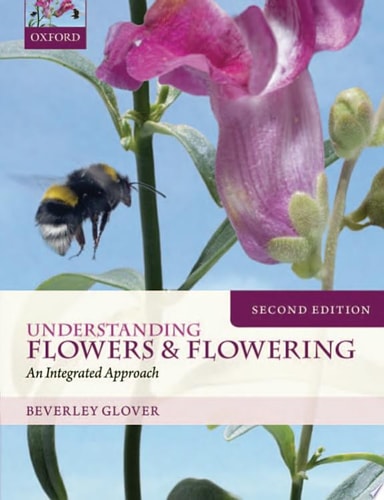
Understanding Flowers and Flowering
0
0
As an Amazon Associate and affiliate partner, Menrva Books earns from qualifying purchases. Learn more
Author Description
Flowers are the beautiful and complex reproductive structures of the angiosperms, one of the most diverse and successful groups of living organisms. The underlying thesis of this book is that to fully understand plant development (and why flowers differ in shape, structure and colour), it is necessary to understand why it is advantageous for them to look like they do. Conversely, in order to fully understand plant ecology, it is necessary to appreciate how floral structures have developed and evolved. Uniquely, this book addresses flowers and flowering from both a molecular genetic perspective (considering flower induction, development and self-incompatibility) and an ecological perspective (looking at the selective pressures placed on plants by pollinators, and the consequences for animal-plant co-evolution). Understanding Flowers and Flowering, the first edition of which won BES Marsh Book of the Year in 2009, begins by considering the evolution of flowers and the history of research into their development. This is followed by a detailed description of the processes which lead to flower production in model plants. The book then examines how flowers differ in shape, structure and colour, and how these differences are generated. Finally it assesses the role of these various aspects of floral biology in attracting pollinators and ensuring successful reproduction. This new edition has been completely revised and updated to reflect the latest advances in the field, especially an increased understanding of the evolution of floral traits. New chapters consider the genetic basis of the floral transition in diverse species, as well as the evolutionary lability of floral form. There is a new focus throughout on both phylogenetic position and morphological diversity across the angiosperm phylogeny. Understanding Flowers and Flowering continues to provide the first truly integrated study of the topic - one that discusses both the how and why of flowering plant reproductive biology.
Menrva's Summary
THE THESIS
This book investigates the intersection of molecular genetics and ecological selective pressures to explain the evolution and development of floral structures in angiosperms. Author Beverley Glover, a professor of plant systematics and evolution, synthesizes complex biological data to argue that plant development and plant ecology are inextricably linked. By examining how genetic mechanisms produce specific floral traits and how those traits respond to pollinator interactions, the text provides a comprehensive framework for understanding plant reproductive success.
THE SCOPE MAP
What You Will Find
- Molecular genetic mechanisms of flower induction and development
- Analysis of self-incompatibility and reproductive strategies
- Evolutionary history of angiosperms and floral trait diversification
- Co-evolutionary dynamics between plants and their pollinators
- Phylogenetic perspectives on morphological variation
Scope Limits
- Does not provide a general gardening or horticultural guide
- Does not cover non-angiosperm plant reproduction
THE AUTHORITY PERSPECTIVE
Experts and academics recognize this text as a foundational, integrated resource for students and researchers in plant biology. Readers frequently note the balance between technical genetic detail and broader ecological context, making it a standard reference for those studying floral evolution.
Page Count:
320
Publication Date:
2014-01-01
Publisher:
Oxford University Press
ISBN-10:
0191637629
ISBN-13:
9780191637629
Science
Genetics
Flowers
Ecology
Evolutionary Biology
Angiosperms
Plant Biology
Development
Botany
Flowers morphology
Plants flowering of
Flowering of Plants
Morphology
Community Tags
Other Editions(2)
Similar Books



Reader Comments
Share Your Thoughts
No comments yet. Be the first to share your thoughts!