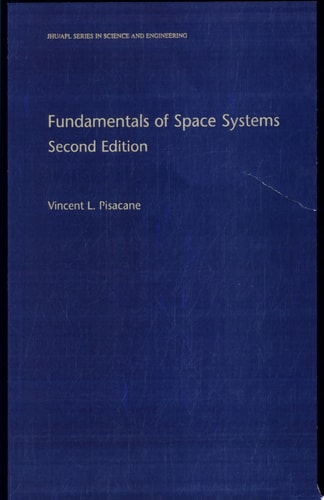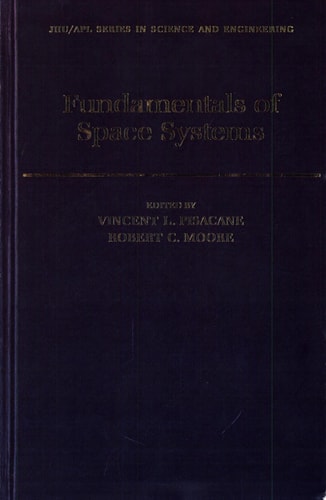
Fundamentals of Space Systems
0
0
As an Amazon Associate and affiliate partner, Menrva Books earns from qualifying purchases. Learn more
Author Description
This multidisciplinary book is intended for individuals interested in understanding, planning, designing, and managing the design, fabrication, integration, and testing of instruments and systems for use in outer space. The authors provide an introduction to the development of space instrumentation and spacecraft systems and subsystems by presenting the principles of systems engineering necessary to formulate the development process and the salient technical characteristics of the functional subsystems. The depth is sufficient to permit the reader to generate an initial mission concept within the boundaries of a given set of specifications. The book exposes the reader to the underlying scientific and engineering foundations as well as the current practices so that they will understand how to carry out appropriate tradeoffs. Topics are covered to the depth that should allow the carrying out of the concept design of a space mission by making the trade-offs necessary to satisfy a given set of needs or systems requirements. For the uninitiated or the more narrowly focused space specialists, this book serves to broaden one's perspective and increase the breadth of one's capabilities. An understanding of this material will also permit professionals to carry our broader assignments and begin the transition to careers in systems engineering, aeronautical technical leadership, or managing the development of space systems. The content can also serve as a good introduction to more focused study.
Menrva's Summary
THE THESIS
This book investigates the fundamental principles and systems engineering methodologies required to design, develop, and manage complex spacecraft and space instrumentation. Authors Robert Y. Moore and Vincent L. Pisacane, drawing from their expertise at the Johns Hopkins University Applied Physics Laboratory, provide a comprehensive framework for mission conceptualization. The text integrates scientific foundations with practical engineering trade-offs, enabling readers to navigate the entire lifecycle of space system development from initial requirements to final testing.
THE SCOPE MAP
What You Will Find
- Systems engineering principles for space mission formulation
- Technical characteristics of functional spacecraft subsystems
- Methodologies for conducting design trade-offs and requirement analysis
- Guidelines for the integration, fabrication, and testing of space instruments
THE AUTHORITY PERSPECTIVE
Professionals and students frequently cite this text as a foundational resource for transitioning into systems engineering and technical leadership roles within the aerospace industry. Experts highlight the book's utility in bridging the gap between narrow technical specialization and the broader requirements of mission-level design.
Page Count:
784
Publication Date:
1994-05-26
Publisher:
Oxford University Press
ISBN-10:
0195074971
ISBN-13:
9780195074970
Science
Engineering
Aerospace
Technology
Community Tags
Similar Books