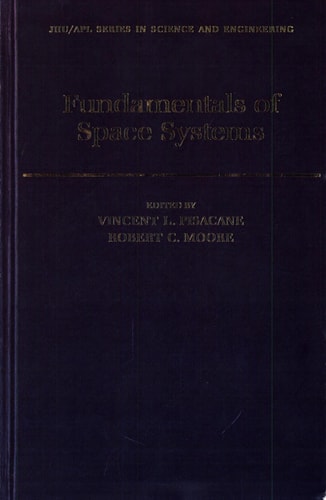
Fundamentals of Space Systems
0
0
As an Amazon Associate and affiliate partner, Menrva Books earns from qualifying purchases. Learn more
Author Description
Fundamentals of Space Systems was developed to satisfy two objectives: the first is to provide a text suitable for use in an advanced undergraduate or beginning graduate course in both space systems engineering and space system design. The second is to be a primer and reference book for space professionals wishing to broaden their capabilities to develop, manage the development, or operate space systems. The authors of the individual chapters are practicing engineers that have had extensive experience in developing sophisticated experimental and operational spacecraft systems in addition to having experience teaching the subject material. The text presents the fundamentals of all the subsystems of a spacecraft missions and includes illustrative examples drawn from actual experience to enhance the learning experience. It includes a chapter on each of the relevant major disciplines and subsystems including space systems engineering, space environment, astrodynamics, propulsion and flight mechanics, attitude determination and control, power systems, thermal control, configuration management and structures, communications, command and telemetry, data processing, embedded flight software, survuvability and reliability, integration and test, mission operations, and the initial conceptual design of a typical small spacecraft mission.
Menrva's Summary
THE THESIS
This text investigates the core principles and technical requirements necessary for the design, development, and operation of modern spacecraft systems. Written by a team of practicing engineers from the Johns Hopkins University Applied Physics Laboratory, the book provides a comprehensive framework for both students and professionals. It synthesizes complex engineering disciplines into a cohesive curriculum, utilizing real-world mission data to bridge the gap between theoretical physics and practical application.
THE SCOPE MAP
What You Will Find
- Comprehensive coverage of spacecraft subsystems including propulsion, thermal control, and attitude determination.
- Methodologies for mission operations, configuration management, and systems engineering.
- Case studies and illustrative examples derived from actual experimental and operational spacecraft missions.
- Technical analysis of astrodynamics, communications, command telemetry, and embedded flight software.
THE AUTHORITY PERSPECTIVE
Experts and educators frequently cite this volume as a foundational reference for advanced undergraduate and graduate-level aerospace engineering courses. Readers often note the high level of technical density and the practical utility of the material for professionals working in the space industry.
Page Count:
848
Publication Date:
2005-06-23
Publisher:
Oxford University Press
ISBN-10:
0195162056
ISBN-13:
9780195162059
Science
Technology
Aerospace
Engineering
textbook
Community Tags
Similar Books