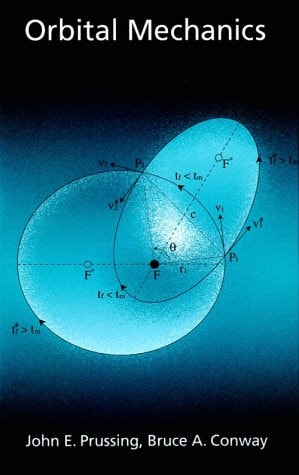
Orbital Mechanics
0
0
As an Amazon Associate and affiliate partner, Menrva Books earns from qualifying purchases. Learn more
Author Description
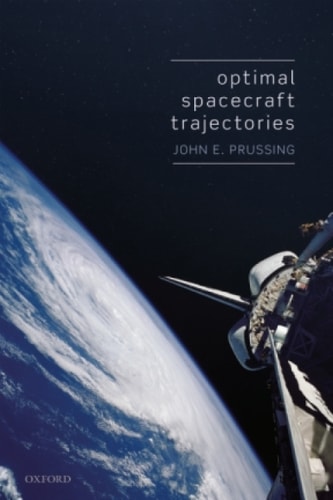
One of the major challenges of modern space mission design is the orbital mechanics -- determining how to get a spacecraft to its destination using a limited amount of propellant. Recent missions such as Voyager and Galileo required gravity assist maneuvers at several planets to accomplish their objectives. Today's students of aerospace engineering face the challenge of calculating these types of complex spacecraft trajectories. This classroom-tested textbook takes its title from an elective course which has been taught to senior undergraduates and first-year graduate students for the past 22 years. The subject of orbital mechanics is developed starting from the first principles, using Newton's laws of motion and the law of gravitation to prove Kepler's empirical laws of planetary motion. Unlike many texts the authors also use first principles to derive other important results including Kepler's equation, Lambert's time-of-flight equation, the rocket equation, the Hill-Clohessy-Wiltshire equations of relative motion, Gauss' equations for the variation of the elements, and the Gauss and Laplace methods of orbit determination. The subject of orbit transfer receives special attention. Optimal orbit transfers such as the Hohmann transfer, minimum-fuel transfers using more than two impulses, and non-coplanar orbital transfer are discussed. Patched-conic interplanetary trajectories including gravity-assist maneuvers are the subject of an entire chapter and are particularly relevant to modern space missions.
Menrva's Summary
THE THESIS
This text investigates the fundamental principles of orbital mechanics required to design and calculate complex spacecraft trajectories for modern space missions. The authors, Bruce A. Conway and John E. Prussing, draw upon over two decades of classroom experience teaching senior undergraduates and graduate students. They utilize a first-principles approach, grounding the derivation of complex orbital equations in Newton's laws of motion and the law of gravitation to provide a rigorous mathematical foundation for aerospace engineering students.
THE SCOPE MAP
What You Will Find
- Derivations of foundational orbital equations including Kepler's equation and the rocket equation.
- Methodologies for orbit determination such as the Gauss and Laplace methods.
- Analysis of optimal orbit transfers, including Hohmann transfers and non-coplanar maneuvers.
- Detailed examination of patched-conic interplanetary trajectories and gravity-assist maneuvers.
THE AUTHORITY PERSPECTIVE
Experts and educators recognize this work as a foundational, classroom-tested resource for students entering the field of aerospace engineering. Readers frequently note the clarity of the derivations and the practical focus on mission-critical trajectory calculations.
Page Count:
208
Publication Date:
1993-09-23
Publisher:
Oxford University Press
ISBN-10:
0195078349
ISBN-13:
9780195078343
Science
Aerospace
Engineering
Physics
textbook