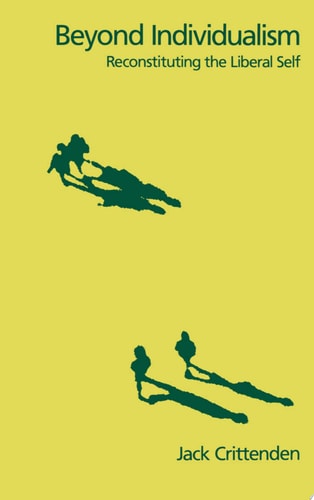
Beyond Individualism: Reconstituting the Liberal Self
0
0
As an Amazon Associate and affiliate partner, Menrva Books earns from qualifying purchases. Learn more
Author Description
In the examination of the conception of human nature, a duality is commonly perceived--the liberal self as atomistic, self-contained, even selfish; and the communitarian self as socially situated and defined through its environment. Crittenden argues that neither view is acceptable, drawing on recent psychological research to expound on a theory of "compound individuality." This work includes a discussion of the compound individual as the self of liberalism, as well as a discussion of the sort of political organization that can generate personal identity constituted by liberal autonomy and communitarian sociality.
Menrva's Summary
THE THESIS
This work investigates whether the traditional dichotomy between atomistic liberal individualism and socially-situated communitarianism can be resolved through a new framework of identity. Jack Crittenden, a scholar of political theory, challenges the binary perception of the self by integrating contemporary psychological research. He proposes a theory of "compound individuality" that seeks to reconcile personal autonomy with the necessity of social embeddedness. The book further explores the specific political structures required to foster this integrated form of identity.
THE SCOPE MAP
What You Will Find
- A critical analysis of the atomistic liberal self versus the communitarian self
- A theoretical framework for "compound individuality" as a synthesis of autonomy and sociality
- Integration of psychological research to support philosophical arguments regarding human nature
- Proposals for political organization that support the development of the compound individual
THE AUTHORITY PERSPECTIVE
Scholars in political philosophy frequently cite this text for its attempt to bridge the gap between competing theories of the self. Readers often note the academic density of the prose, which requires a foundational understanding of liberal and communitarian discourse.
Page Count:
240
Publication Date:
1992-08-13
Publisher:
Oxford University Press
ISBN-10:
0195073304
ISBN-13:
9780195073300
Philosophy
Psychology
Individualism
Liberalism
Communities
Social Theory
Community Tags
Similar Books