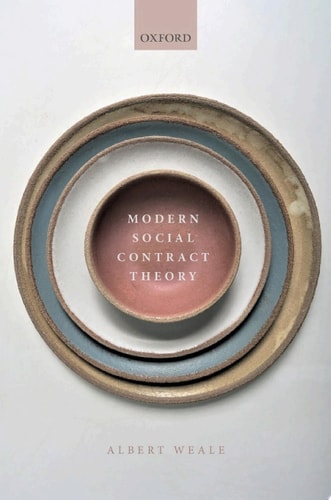
Modern Social Contract Theory
0
0
As an Amazon Associate and affiliate partner, Menrva Books earns from qualifying purchases. Learn more
Author Description
Modern Social Contract Theory provides an exposition and evaluation of major work in social contract theory from 1950 to the present. It locates the central themes of that theory in the intellectual legacy of utilitarianism, particularly the problems of defining principles of justice and of showing the grounds of moral obligation. It demonstrates how theorists responded in a novel way to the dilemmas articulated in utilitarianism, developing in their different approaches a constructivist method in ethics, a method that aimed to vindicate a liberal, democratic and just political order. A distinctive feature of the book is its comparative approach. By placing the works of Barry, Buchanan and Tullock, Harsanyi, Gauthier, Grice, Rawls, and Scanlon alongside one another, similarities and differences are brought out, most notably in the way in which principles are derived by each author from the contractual construction as well as the extent to which the obligation to adopt those principles can be rationally grounded. Each theory is placed in its particular intellectual context. Special attention is paid to the contrasting theories of rationality adopted by the different authors, whether that be utility theory or a deliberative conception of rationality, with the intention of assessing how far the principles advanced can be justified by reference to the hypothetical choices of rational contracting agents. The book concludes with a discussion of some principal objections to the enterprise of contract theory, and offers its own programme for the future of that theory taking the form of the empirical method.
Menrva's Summary
THE THESIS
This book investigates the evolution and validity of social contract theory from 1950 to the present, questioning how modern theorists have attempted to ground principles of justice and moral obligation. Albert Weale, a scholar in political theory, evaluates the intellectual transition from utilitarian frameworks to constructivist methods in ethics. He argues that these modern theories aim to justify a liberal, democratic political order by analyzing the hypothetical choices of rational agents.
THE SCOPE MAP
What You Will Find
- Comparative analysis of major theorists including Barry, Buchanan, Tullock, Harsanyi, Gauthier, Grice, Rawls, and Scanlon.
- Examination of contrasting models of rationality, specifically utility theory versus deliberative rationality.
- A proposed empirical method for the future development of contract theory.
Scope Limits
- The text focuses primarily on the period from 1950 to the present and does not provide an exhaustive history of classical social contract theory.
- It does not offer a comprehensive critique of non-liberal or non-democratic political systems.
THE AUTHORITY PERSPECTIVE
Scholars and students of political philosophy frequently identify this work as a rigorous comparative resource for understanding the nuances between major 20th-century contractarian thinkers. Readers often note the academic density of the prose, which is intended for those already familiar with the foundational debates in ethics and political theory.
Page Count:
470
Publication Date:
2020-01-01
Publisher:
OUP Oxford
ISBN-10:
0192594990
ISBN-13:
9780192594990
Ethics
Liberalism
Social Theory
Political Philosophy