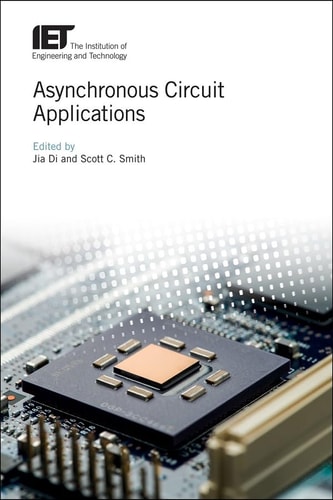
Asynchronous Circuit Applications
0
0
As an Amazon Associate and affiliate partner, Menrva Books earns from qualifying purchases. Learn more
Author Description
Unlike conventional synchronous circuits, asynchronous circuits are not coordinated by a clocking signal, but instead use handshaking protocols to control circuit behaviour. Asynchronous circuits have been found to offer several advantages, including high energy efficiency, flexible timing requirements, high modularity, low noise/EMI, and robustness to PVT variations. At the same time, growing pressures on the electronics industry for ever smaller, more efficient ICs are pushing the limits of conventional circuit technologies. These factors are spurring growing interest in asynchronous circuits amongst both the academic research and commercial R&D communities.
Menrva's Summary
THE THESIS
of this book is that asynchronous circuits offer significant advantages over traditional synchronous circuits, making them a compelling area for future electronic design.** The authors, Jia Di and Scott C. Smith, explore the fundamental principles of asynchronous circuit design, contrasting them with clock-driven synchronous systems. They detail the inherent benefits of asynchronous approaches, such as enhanced energy efficiency, adaptability to varying timing demands, improved modularity, reduced electromagnetic interference, and greater resilience to process, voltage, and temperature (PVT) fluctuations. The growing demand for more compact and efficient integrated circuits, coupled with the limitations of current synchronous technologies, is presented as a key driver for the increasing academic and commercial interest in this field.
THE SCOPE MAP
- Detailed comparison of asynchronous and synchronous circuit design methodologies.
- Explanation of handshaking protocols used for circuit control in asynchronous systems.
- Analysis of advantages including energy efficiency, flexible timing, modularity, low noise, and PVT robustness.
- Discussion of the current industry pressures driving the need for advanced circuit technologies.
- Exploration of the growing interest in asynchronous circuits within academic research and commercial R&D.
- Case studies or examples illustrating practical applications of asynchronous circuits (inferred from context, actual content not provided).
THE AUTHORITY PERSPECTIVE
The book is positioned as a timely exploration of asynchronous circuit design, addressing the increasing industry demand for more efficient and robust electronic components. Its focus on the advantages over conventional synchronous circuits suggests it aims to inform researchers and developers about a promising alternative technology. The material presented likely appeals to those in academic research and commercial R&D seeking to push the boundaries of integrated circuit design.
Page Count:
368
Publication Date:
2019-11-07
Publisher:
Institution of Engineering and Technology
ISBN-10:
1785618172
ISBN-13:
9781785618178
Non-Fiction
Science & Technology
Electrical Engineering
Computer Science
Computer Engineering
Community Tags
Other Editions(2)
Similar Books