Mesoamerican Architecture As a Cultural Symbol
0
0
As an Amazon Associate and affiliate partner, Menrva Books earns from qualifying purchases. Learn more
Author Description
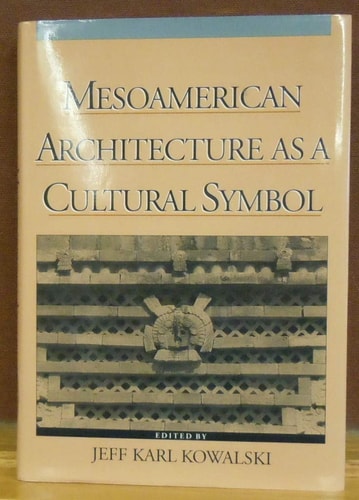
This book considers the ways in which the built environment in Mesoamerica functioned as a carrier of cultural meanings. Ancient Mesoamerica - making up much of present-day Mexico, Guatemala, and Belize, along with parts of Honduras and El Salvador - witnessed the development of many regional cultures and the concentration of peoples in architectural centers such as La Venta, Monte Alban, Teotihuacan, Mitla, Tula, El Tajin, Tenochtitlan, Copan, Uxmal, Chichen Itza, and Tulum. Mesoamerican architecture is closely related to the social structure of the community, and the design and spatial distribution of pyramid-temples, palaces, ballcourts, shrines, sweatbaths, and ordinary dwellings at such sites reflected and reinforced the codes of behavior within particular societies. In this collection, a number of prominent scholars provide new interpretations and useful syntheses of many of the most significant Mesoamerican architectural traditions from the Preclassic to the Postclassic periods. It should appeal to a broad readership of archaeologists, Mesoamerican specialists, and to those interested in ancient art, society, and history.
Menrva's Summary
THE THESIS
This work investigates how the built environment of ancient Mesoamerica functioned as a primary medium for expressing and reinforcing complex cultural, social, and political meanings. Edited by Jeff Karl Kowalski, the text compiles contributions from prominent scholars to analyze how architectural design and urban planning at sites like Teotihuacan and Chichen Itza mirrored the behavioral codes and social hierarchies of their respective civilizations. By examining structures ranging from pyramid-temples to residential dwellings, the authors provide a comprehensive framework for understanding the intersection of physical space and societal identity from the Preclassic to the Postclassic periods.
THE SCOPE MAP
What You Will Find
- Analysis of major architectural centers including La Venta, Monte Alban, and Tenochtitlan.
- Examination of diverse structure types such as ballcourts, palaces, shrines, and sweatbaths.
- Synthesis of architectural evolution across the Preclassic, Classic, and Postclassic periods.
- Scholarly interpretations of how spatial distribution reflects social structure and community behavior.
THE AUTHORITY PERSPECTIVE
Experts recognize this collection as a valuable synthesis for specialists and students of Mesoamerican history. Readers frequently note the academic rigor of the contributions and the clarity with which the authors connect physical ruins to the underlying social dynamics of ancient cultures.
Page Count:
432
Publication Date:
1999-03-04
Publisher:
Oxford University Press
ISBN-10:
0195079612
ISBN-13:
9780195079616
History
Architecture
Archaeology
Anthropology
Art History
Community Tags
Similar Books














