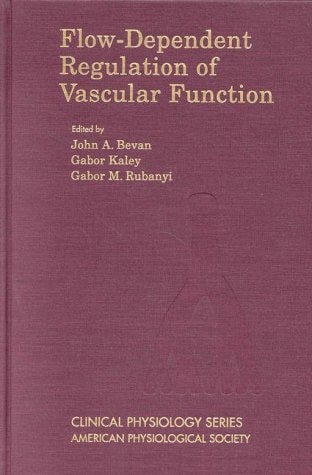
Flow-Dependent Regulation of Vascular Function
0
0
As an Amazon Associate and affiliate partner, Menrva Books earns from qualifying purchases. Learn more
Author Description
This book brings together current research on the way in which blood flow can regulate vascular function--with particular emphasis on vascular tone. Evidence that this occurs is derived from the study of isolated cellular and tissue systems, in vitro vascular segments and vascular beds from both animals and humans. It seems likely that flow-sensitive mechanisms are found in most arteries and veins. Considerable attention is devoted in this book to the role of the endothelium. It also examines the cellular and sub-cellular mechanisms involved, the effective stimulus, the signal transduction systems, the role of flow-dependent mechanisms in various physiological regulating processes and the role of flow in the long-term design of the circulation system. Included are chapters concerned with the involvement of flow-related mechanisms in disease, for example arteriosclerosis, vasospasm and their alteration in heart failure and hypertension. It may be that sensitivity to flow represents an important underlying characteristic of the vascular system essential to its role in bringing the desired volume of blood to tissues in amounts appropriate to their need.
Menrva's Summary
THE THESIS
This text investigates the physiological mechanisms by which blood flow regulates vascular function and tone. The authors, Gabor Kaley, Gabor M. Rubanyi, and John A. Bevan, synthesize research from isolated cellular systems, animal models, and human clinical studies to establish the role of flow-sensitive mechanisms in the circulatory system. The work provides a comprehensive framework for understanding how mechanical forces influence vascular biology and long-term structural design.
THE SCOPE MAP
What You Will Find
- Analysis of cellular and sub-cellular signal transduction systems in response to blood flow.
- Examination of the endothelium as a primary mediator of flow-dependent vascular tone.
- Integration of data from isolated tissue segments and whole-organ vascular beds.
- Clinical correlations regarding arteriosclerosis, vasospasm, heart failure, and hypertension.
THE AUTHORITY PERSPECTIVE
Experts recognize this volume as a foundational reference for understanding the mechanical regulation of the vascular system. Researchers frequently cite the text for its detailed examination of the interplay between hemodynamic forces and endothelial function.
Page Count:
371
Publication Date:
1995-01-15
Publisher:
Oxford University Press
ISBN-10:
019507842X
ISBN-13:
9780195078428
Science
Physiology
Cardiovascular
Blood Flow
Biology
Medicine
Community Tags
Similar Books