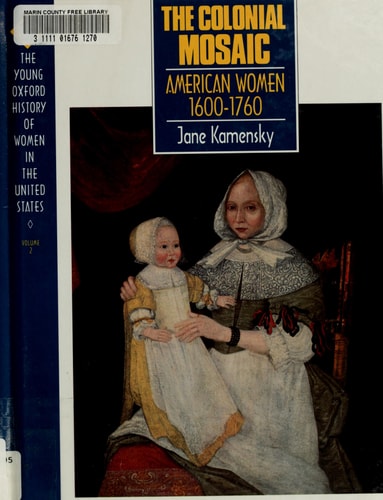
The Colonial Mosaic: American Women 1600-1760
0
0
As an Amazon Associate and affiliate partner, Menrva Books earns from qualifying purchases. Learn more
Author Description
The story of colonial settlement is often told as if men were the only actors, but women--as wives, agricultural workers, domestic servants, members of religious congregations, community builders, and mothers of a new generation--were crucial to European settlements just as women in Native American groups were to theirs.Colonial "women's work" was hard, physical labor. In the South, the urgency of farming crops for export stretched a woman's workday from sunrise to sunset (and beyond). It was not much different in New England, though the goal was more often to maintain the family and set aside enough to get through the harsh winter. In the 17th and early 18th century, nearly endless toil marked the lives of the majority of American women, regardless of their region, color, or status.Life for women and men began to change in the late 17th century as slavery became an accepted economic solution. For the planter's wife, it meant a life of increased ease. For the thousands of black women who were brought to the colonies in chains, the exact opposite was true. In the North, cities such as New York, Boston, and Philadelphia saw thousands of new immigrants living side by side with Anglo Americans, enslaved African Americans, and a growing free black community. It was here that so-called "she merchants" began to be a factor in growing professions such as newspaper printing, forging new paths for themselves and helping to fuel booming urban economies.But most women in the colonies, enslaved and free, were farm wives; giving birth to child after child, spending all their waking hours doing backbreaking work. Yet, some women entered the era of the revolution with rising expectations. They were marrying whom and when they chose, or choosing to remain unmarried. They were seeking divorces when their marriages became unbearable. They were not only listening to revival preaching, but delivering God's message themselves. They were fleeing cruel masters in search of a better life.
Menrva's Summary
THE THESIS
This volume investigates the multifaceted roles and experiences of women in colonial America between 1600 and 1760, challenging the male-centric narratives of early settlement. Jane Kamensky, a historian specializing in early American social and cultural history, utilizes primary source records and demographic data to reconstruct the daily lives of diverse women. She argues that women were not merely peripheral figures but essential architects of colonial society, whose labor and agency shaped the economic, religious, and social structures of the era.
THE SCOPE MAP
What You Will Find
- Analysis of labor patterns among agricultural workers, domestic servants, and urban merchants.
- Examination of the intersectional experiences of European, Native American, and enslaved African women.
- Discussion of shifting social norms regarding marriage, divorce, and religious participation.
- Evaluation of the economic impact of slavery on the lives of both planter wives and enslaved women.
THE AUTHORITY PERSPECTIVE
Historians and educators frequently cite this work as a foundational text for understanding the gendered dynamics of the colonial period. Readers note the accessibility of the prose, which effectively synthesizes complex social history for a broad audience.
Page Count:
160
Publication Date:
1995-06-15
Publisher:
Oxford University Press
ISBN-10:
0195080157
ISBN-13:
9780195080155
History
United States
Women
Social History
American History
Colonial History
Community Tags
Similar Books