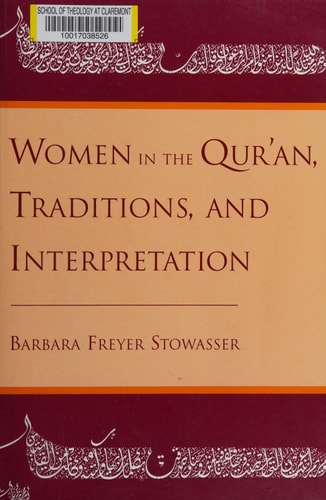
Women in the Qur'an, Traditions, and Interpretation
0
0
As an Amazon Associate and affiliate partner, Menrva Books earns from qualifying purchases. Learn more
Author Description
Islamic ideas about women and their role in society spark considerable debate--both in the Western world, and in the Islamic world itself. Despite the popular attention surrounding Middle Eastern attitudes toward women, there has been little systematic study of the statements regarding women in the Qur'an. Barbara Stowasser fills this void with this study on the women of Islamic sacred history.Women and the Qur'an, Traditions, and Interpretation presents the Qur'anic revelations on female figures associated with God's prophets from Adam to Muhammad. Revealed narratives and legislation are then pursued through their medieval, modern, and contemporary interpretations. The theological exegetic sources here chosen, all Sunni, include the major classical works as well as, for the modern period, examples of modernist, traditionalist, and fundamentalist exegesis. For Hadith materials beyond the theological tafsir, Stowasser analyzes both popular narratives of the "tales of the prophets" genre and also representative samples of the classical historical and legal Hadith. A close reading of modern sources, including by lay writers, shows the waning influence of these traditional materials in present-day Islamic thought.By telling the stories of the women of sacred history in Qur'an and interpretation, this book presents an introduction to past and present Islamic paradigms of doctrine and their socio-economic and political applications. Stowasser establishes the link between the female figures as cultural symbol, and Islamic self-perceptions from the beginning to the present time.
Menrva's Summary
THE THESIS
This book investigates how the Qur'anic narratives regarding female figures have been interpreted and utilized to shape Islamic social and political paradigms throughout history. Barbara Freyer Stowasser, a scholar of Islamic studies, utilizes a rigorous comparative analysis of Sunni exegetic sources to trace the evolution of these interpretations. By examining texts ranging from classical theological works to modern fundamentalist and modernist writings, she demonstrates how the symbolic representation of women in sacred history reflects broader shifts in Islamic self-perception and doctrine.
THE SCOPE MAP
What You Will Find
- Analysis of Qur'anic revelations concerning female figures from Adam to Muhammad.
- Comparative study of medieval, modern, and contemporary Sunni exegetic sources.
- Examination of Hadith materials, including popular narratives and legal texts.
- Evaluation of the influence of traditional materials on present-day Islamic thought.
THE AUTHORITY PERSPECTIVE
Scholars and students of Islamic history frequently cite this work as a foundational text for understanding the intersection of gender, theology, and exegesis. Readers often note the academic density of the prose, which provides a comprehensive framework for analyzing the evolution of Islamic doctrine.
Page Count:
216
Publication Date:
1994-08-18
Publisher:
Oxford University Press
ISBN-10:
0195084802
ISBN-13:
9780195084801
History
Religion
Islam
Kindle Store
Kindle eBooks
Women in Islam
Women Studies
Quran
Categories
Theology
Community Tags
Other Editions(4)


Similar Books

Reader Comments
Share Your Thoughts
No comments yet. Be the first to share your thoughts!