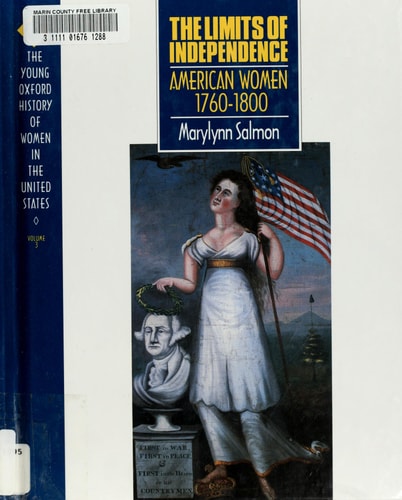
The Limits of Independence: American Women 1760-1800
0
0
As an Amazon Associate and affiliate partner, Menrva Books earns from qualifying purchases. Learn more
Author Description
The second half of the 18th century saw a handful of English colonies transform themselves into a nation. This process involved not only a revolution against the British crown but also the uniting of a diverse population; in addition to the English and Africans who made up the bulk of the population, people from continental Europe had to become willing to join in the creation of the new republic. Tradition dictated that the independent male citizen was the most important actor in this drama, but women's contributions to the war effort and support of the political ideals of the era were essential to the survival of the new United States.The first obligation of a women--to God and to country--was to marry and bear children. The lives of the 18th-century white women were filled with the numerous demands of child care and housekeeping. African-American women faced the same demands, but found their ability to care for their families sharply limited by their lives as slaves, while Native American women often saw their families and tribes destroyed when whites seized their lands in the name of the federal government. But there were other forces at work during this turbulent period as the community of women addressed issues of educational reform, the abolition of slavery in the North and renewed embrace of it in the South, voting rights, religion, the rise of prominent women intellectuals, and the ever-changing relationships between women and men.The poet Phillis Wheatley, the writer and educator Susanna Rowson, and other women--both well known and unsung--fill the pages of The Limits of Independence. The book looks at the traditional patterns of women's lives during the time of the American Revolution and charts the new directions to come as women help to carve a new nation "dedicated to the proposition that all men are created equal."
Menrva's Summary
THE THESIS
This work investigates how American women navigated the restrictive social and political structures of the late 18th century while contributing to the formation of the new republic. Marylynn Salmon, a scholar of early American legal and social history, utilizes primary source documents and historical records to analyze the intersection of gender, race, and citizenship. The book argues that while the rhetoric of the American Revolution emphasized equality, the lived reality for women—whether white, African-American, or Native American—was defined by distinct limitations and evolving societal expectations. By examining both prominent figures and ordinary citizens, the author constructs a framework that highlights the essential, yet often overlooked, roles women played in the survival of the early United States.
THE SCOPE MAP
What You Will Find
- Analysis of the domestic and reproductive expectations placed upon women in the 1760-1800 period.
- Comparative study of the experiences of white, enslaved African-American, and Native American women.
- Examination of the impact of the American Revolution on women's political participation and educational reform.
- Discussion of the influence of early female intellectuals and writers on the cultural landscape of the new nation.
THE AUTHORITY PERSPECTIVE
Historians and educators frequently cite this volume as a reliable, accessible resource for understanding the gendered dimensions of the American founding era. The text is noted for its ability to synthesize complex social history into a clear narrative suitable for both academic and general audiences.
Page Count:
144
Publication Date:
1994-06-23
Publisher:
Oxford University Press
ISBN-10:
0195081250
ISBN-13:
9780195081251
History
Social History
18th century
United States
American History
Women
Community Tags
Similar Books