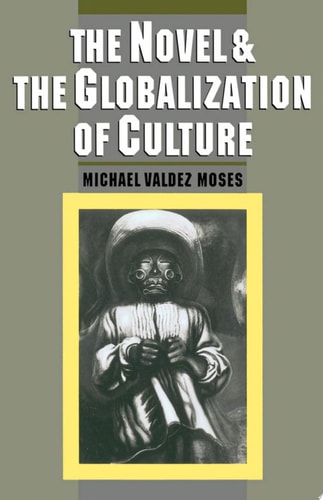
The Novel and the Globalization of Culture
0
0
As an Amazon Associate and affiliate partner, Menrva Books earns from qualifying purchases. Learn more
Author Description
Bringing together canonical European authors with authors from the Third World, this book analyzes the emergence of the modern global novel, and the way it mirrors the underlying process of cultural globalization. Through detailed readings of Stendhal, Hardy, Conrad, Achebe, and Vargas Llosa, this study reveals how the spread of Western modernity--materially and culturally--has been shadowed by the destruction of traditional societies. These novels focus on the individual tragedies of those who represent pre-modern ways of life; in the process, offering a corrective to Hegel's abstruse philosophy of history. From rural Victorian England to the Malay Archipelago, and from the Igbo heartland in Africa to the backlands of Brazil, a global narrative unfolds, one where the forces of modernization clash with the defenders of traditional society. Moses contributes to the ongoing debate on Alexandre Kojève and the "end of history", while, at the same time, moving beyond sterile oppositions--canonical versus non-canonical works, formal literary criticism versus political/historical critique. With its new conceptualization of modernity and globalization, this book will interest the literary scholar, cultural critic, social scientist, and political theorist.
Menrva's Summary
THE THESIS
This book investigates how the modern global novel functions as a mirror for the complex, often destructive processes of cultural globalization and the spread of Western modernity. Michael Valdez Moses, a scholar of literature and political theory, utilizes a comparative framework to examine how canonical European literature and post-colonial narratives intersect. By analyzing the tension between modernization and traditional societal structures, the author argues that these literary works provide a vital, human-centered critique of historical philosophies, specifically challenging the Hegelian concept of the end of history.
THE SCOPE MAP
What You Will Find
- Comparative analysis of canonical European authors alongside Third World writers.
- Detailed literary readings of works by Stendhal, Hardy, Conrad, Achebe, and Vargas Llosa.
- A critical examination of the intersection between political theory, specifically the work of Alexandre Kojève, and literary form.
- A thematic exploration of the clash between pre-modern traditional societies and the expansion of Western modernity.
THE AUTHORITY PERSPECTIVE
Scholars and critics recognize this work as a significant contribution to the synthesis of formal literary analysis and political history. The text is frequently cited for its ability to bridge the gap between canonical studies and post-colonial discourse, making it a valuable resource for researchers in both the humanities and social sciences.
Page Count:
272
Publication Date:
1995-05-25
Publisher:
Oxford University Press
ISBN-10:
0195089529
ISBN-13:
9780195089523
History
Political Theory
Modernity
Globalization
Literary Criticism
English fiction
Community Tags
Similar Books