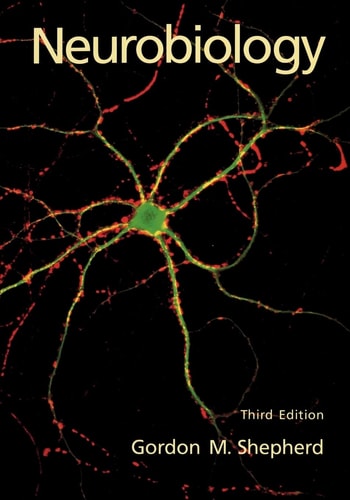
Neurobiology
0
0
As an Amazon Associate and affiliate partner, Menrva Books earns from qualifying purchases. Learn more
Author Description
This widely used and highly praised textbook has been extensively revised to reflect the most exciting research across the entire range of neuroscience. A new feature is an introductory discussion of the mechanisms of gene regulation, while the superfamily of molecules responsible for membrane signaling is given new emphasis as a unifying theme throughout molecular and cellular neurobiology. The roles of these molecules in impulse conduction and synaptic transmission are fully explained, and illustrated by computer models. For the first time in a neurobiology text, these mechanisms can be explored by using a state-of-the-art interactive computer program provided with an accompanying tutorial handbook. In the sections dealing with neural systems, the comparative approach continues to be used to illustrate general principles. Students learn about the progress being made toward a molecular basis for sensory perception and new methods for revealing the neural activity underlying sensory and motor functions are described. There is an emphasis on the plasticity of both sensory and the motor circuits in mediating functions that reflect the effects of activity or recovery from injury. Central systems continue to be featured as the culmination of neural evolution. These include the systems vital for all animals, such as sleeping, feeding and reproduction, as well as the systems for language, emotion and higher cognitive functions that reach their peak in humans. There is special emphasis on recent work on memory, contrasting the mechanisms for short-term working memory and long-term memory and summarizing the present understanding of the mechanisms of long-term potential. The twin themes of organizational levels and comparative systems help bring together the vast range of studies and provides a conceptual framework that unifies the field of neurobiology. As in previous editions, the text continues to draw on the advantages of having a single author.
Menrva's Summary
THE THESIS
This text investigates the fundamental organizational principles of the nervous system, ranging from molecular mechanisms to complex behavioral systems. Author Gordon M. Shepherd synthesizes decades of research to provide a unified conceptual framework for understanding how neural structures facilitate sensory perception, motor control, and higher cognitive functions. By integrating molecular biology with systems-level analysis, the work establishes a comprehensive baseline for students and researchers in the field of neurobiology.
THE SCOPE MAP
What You Will Find
- Molecular mechanisms of membrane signaling and gene regulation.
- Comparative analysis of neural systems across different animal species.
- Integration of computer modeling to visualize synaptic transmission and impulse conduction.
- Detailed examination of neural plasticity, memory formation, and higher cognitive processes.
THE AUTHORITY PERSPECTIVE
Experts and educators frequently cite this work as a foundational text due to its cohesive single-author perspective and logical progression from cellular to systemic levels. Readers often note the academic density of the prose, which is balanced by clear illustrations and interactive modeling tools.
Page Count:
776
Publication Date:
1994-05-05
Publisher:
Oxford University Press
ISBN-10:
0195088433
ISBN-13:
9780195088434
Science
textbook
Biology
Neurobiology
Medicine
Neuroscience
Community Tags
Similar Books