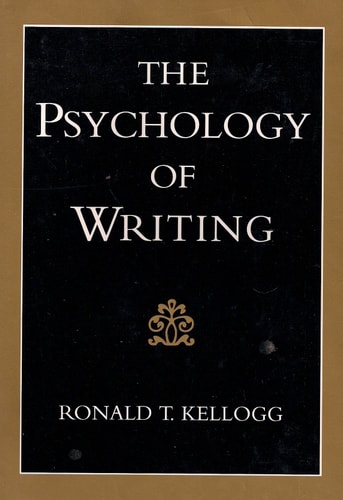
The Psychology of Writing
0
0
As an Amazon Associate and affiliate partner, Menrva Books earns from qualifying purchases. Learn more
Author Description
The human ability to render meaning through symbolic media such as art, dance, music, and speech defines, in many ways, the uniqueness of our species. One symbolic medium in particular--written expression--has aroused increasing interest among researchers across disciplines, in areas as diverse as the humanities, education, and the social sciences because it offers a fascinating window into the processes underlying the creation and enunciation of symbolic representation.In The Psychology of Writing, cognitive psychologist Ronald T. Kellogg reviews and integrates the fast-growing, multidisciplinary field of composition research, a field that seeks to understand how people formulate and express their thoughts with the symbols of written text. By examining the production of written text, the book fills a large gap in cognitive psychology, which until now has focused on speech production, comprehension, and reading, while virtually ignoring how people write. Throughout, the author masterfully examines the many critical factors that come together during the writing process--including writer personality, work schedules, method of composing, and knowledge. In providing an important new theoretical framework that enables readers from a wide range of backgrounds to navigate the extensive composition literature, the author drives home the profound significance of meaning-making as a defining feature of human cognition. Kellogg not only draws from the work of leading composition scholars, but quotes insights into the writing process proffered by some of the most gifted practitioners of the writing craft--including E.M. Forster, John Updike, and Samuel Johnson.Engaging and lively, The Psychology of Writing is the perfect introduction to the subject for students, researchers, journalists, and interested general readers.
Menrva's Summary
THE THESIS
This book investigates the cognitive mechanisms and psychological processes that enable humans to translate abstract thought into written symbolic expression. Ronald T. Kellogg, a cognitive psychologist, synthesizes multidisciplinary research from composition studies, education, and the social sciences to address the historical neglect of writing production within cognitive psychology. By establishing a new theoretical framework, the author examines how writers manage knowledge, personality, and procedural methods to create text.
THE SCOPE MAP
What You Will Find
- Analysis of cognitive processes involved in text production and symbolic representation.
- Examination of external and internal factors including writer personality and work habits.
- Integration of empirical composition research with insights from literary practitioners.
- Theoretical models for understanding the intersection of human cognition and written communication.
THE AUTHORITY PERSPECTIVE
Experts recognize this work as a foundational text that bridges the gap between cognitive psychology and composition theory. Readers frequently note the accessibility of the prose, which successfully translates complex psychological concepts for students and general audiences alike.
Page Count:
264
Publication Date:
1994-07-28
Publisher:
Oxford University Press
ISBN-10:
0195081390
ISBN-13:
9780195081398
Psychology
Non-Fiction
Writing
Authorship
Education
Community Tags
Other Editions(3)
Similar Books









Reader Comments
Share Your Thoughts
No comments yet. Be the first to share your thoughts!