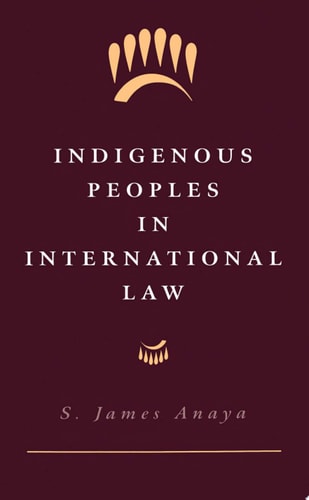
Indigenous Peoples in International Law
0
0
As an Amazon Associate and affiliate partner, Menrva Books earns from qualifying purchases. Learn more
Author Description
In Indigenous Peoples in International Law, James Anaya explores the development and contours of international law as it concerns the world's indigenous peoples, culturally distinctive groups that are descended from the original inhabitants of lands now dominated by others. Anaya demonstrates that, while historical trends in international law largely facilitated the colonization of indigenous peoples and their lands, modern international law's human rights program has been responsive to indigenous peoples' aspirations to survive as distinct communities in control of their own destinies.Over the last several years, the international system--particularly as embodied in the United Nations and other international institutions--has exhibited a renewed and increasingly heightened focus on the concerns of indigenous peoples. Anaya discusses the resulting new generation of international treaty and customary norms, while linking the new and emergent norms with previously existing international human rights standards of general applicability. Anaya further identifies and analyzes institutions and procedures, at both the domestic and international levels, for implementing international norms concerning indigenous peoples.Indigenous Peoples in International Law provides a theoretically grounded and practically oriented synthesis of the historical, contemporary, and emerging international law related to indigenous peoples. It will be of great interest to scholars and lawyers in international law and human rights.
Menrva's Summary
THE THESIS
This work investigates the evolution of international legal frameworks regarding the rights and sovereignty of indigenous peoples. S. James Anaya, a prominent legal scholar and former UN Special Rapporteur, utilizes a comprehensive analysis of historical colonial precedents and contemporary human rights standards to argue that international law is shifting toward the protection of indigenous self-determination. The text provides a rigorous examination of how global institutions, particularly the United Nations, have integrated indigenous concerns into treaty and customary law.
THE SCOPE MAP
What You Will Find
- Historical analysis of international legal trends that facilitated colonization.
- Examination of modern human rights norms and their application to indigenous communities.
- Evaluation of domestic and international institutional procedures for norm implementation.
- Synthesis of emerging treaty standards and customary international law.
THE AUTHORITY PERSPECTIVE
Legal scholars and practitioners frequently cite this text as a foundational resource for understanding the intersection of human rights and indigenous sovereignty. Experts highlight the author's ability to bridge complex theoretical frameworks with practical applications in international litigation and policy.
Page Count:
288
Publication Date:
1996-05-23
Publisher:
Oxford University Press
ISBN-10:
0195086201
ISBN-13:
9780195086201
Human rights
Law
International Law
Community Tags
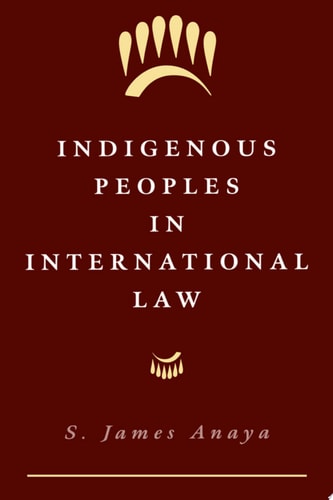
Other Editions(5)


Similar Books






Reader Comments
Share Your Thoughts
No comments yet. Be the first to share your thoughts!