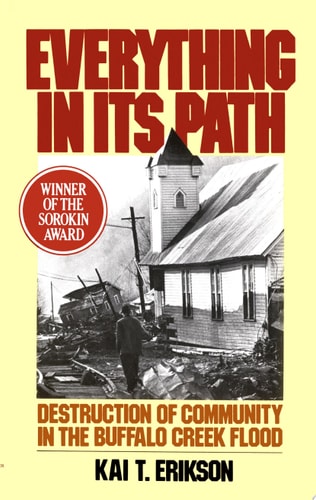
Everything in Its Path
0
0
As an Amazon Associate and affiliate partner, Menrva Books earns from qualifying purchases. Learn more
Author Description
The 1977 Sorokin Award–winning story of Buffalo Creek in the aftermath of a devastating flood. On February 26, 1972, 132-million gallons of debris-filled muddy water burst through a makeshift mining-company dam and roared through Buffalo Creek, a narrow mountain hollow in West Virginia. Following the flood, survivors from a previously tightly knit community were crowded into trailer homes with no concern for former neighborhoods. The result was a collective trauma that lasted longer than the individual traumas caused by the original disaster. Making extensive use of the words of the people themselves, Erikson details the conflicting tensions of mountain life in general—the tensions between individualism and dependency, self-assertion and resignation, self-centeredness and group orientation—and examines the loss of connection, disorientation, declining morality, rise in crime, rise in out-migration, etc., that resulted from the sudden loss of neighborhood.
Menrva's Summary
THE THESIS
The 1977 Sorokin Award–winning story of Buffalo Creek in the aftermath of a devastating flood. On February 26, 1972, 132-million gallons of debris-filled muddy water burst through a makeshift mining-company dam and roared through Buffalo Creek, a narrow mountain hollow in West Virginia. Following the flood, survivors from a previously tightly knit community were crowded into trailer homes with no concern for former neighborhoods. The result was a collective trauma that lasted longer than the individual traumas caused by the original disaster. Making extensive use of the words of the people themselves, Erikson details the conflicting tensions of mountain life in general—the tensions between individualism and dependency, self-assertion and resignation, self-centeredness and group orientation—and examines the loss of connection, disorientation, declining morality, rise in crime, rise in out-migration, etc., that resulted from the sudden loss of neighborhood.
THE SCOPE MAP
- The social and psychological impact of the 1972 Buffalo Creek flood on a West Virginia community.
- Extensive use of survivor testimonies and direct quotes to illustrate the collective trauma.
- Analysis of the breakdown of community structures and social cohesion post-disaster.
- Examination of the tensions inherent in mountain life, such as individualism versus dependency.
- Exploration of the consequences of displacement, including disorientation, declining morality, and increased crime.
- Discussion of the long-term effects of the disaster on the community's social fabric and out-migration patterns.
THE AUTHORITY PERSPECTIVE
This seminal work in disaster sociology is widely recognized for its profound exploration of collective trauma and community breakdown following the 1972 Buffalo Creek flood. Erikson's approach, centering the voices of survivors, provides a deeply human perspective on the disaster's aftermath. The book is lauded for its detailed analysis of how the loss of neighborhood and social ties exacerbated the suffering caused by the physical destruction. It remains a key text for understanding the sociological consequences of natural disasters and the resilience, or lack thereof, of tightly knit communities.
Page Count:
284
Publication Date:
1976-01-01
Publisher:
Simon and Schuster
ISBN-10:
0671240676
ISBN-13:
9780671240677
Non-Fiction
Autobiography
History
West Virginia History
Community Studies
Sociology
American History
Community Tags
Similar Books














