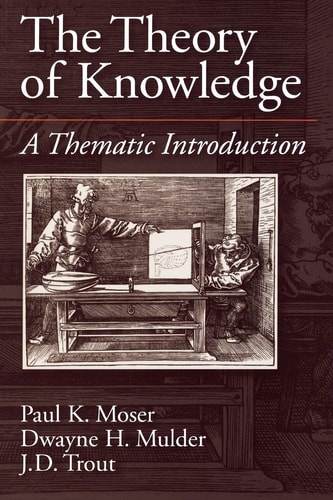
The Theory of Knowledge: A Thematic Introduction (American History)
0
0
As an Amazon Associate and affiliate partner, Menrva Books earns from qualifying purchases. Learn more
Author Description
The Theory of Knowledge: A Thematic Introduction explains the main ideas and problems of contemporary epistemology while avoiding technical detail. Comprehensive and rich in illustrations and examples, it highlights contemporary debates over the definition, sources, and limits of human knowledge, and covers major topics including the nature of belief, theories of truth, epistemic justification, the Gettier problem, skepticism, and epistemic rationality. Its discussions identify important connections between traditional epistemological questions and cognitive science, the history of science, the sociology of knowledge, and cross-cultural studies.The book culminates with a focus on questions regarding epistemological method and an examination of the roots of contemporary analytic approaches to epistemology. The authors defend a distinctive position regarding epistemological method, called broad explanationism, that incorporates some insights from naturalism in epistemology. The volume is enhanced by a glossary of important epistemological terms and suggestions for further reading. Easily accessible to beginning students in philosophy, The Theory of Knowledge serves as an ideal text for courses in the theory of knowledge and will also appeal to general readers interested in philosophy.
Menrva's Summary
THE THESIS
This book investigates the fundamental nature, sources, and limitations of human knowledge through the lens of contemporary epistemology. The authors, Dwayne H. Mulder, J. D. Trout, and Paul K. Moser, utilize a thematic approach to bridge traditional philosophical inquiry with modern cognitive science and the history of science. By presenting a clear framework, they argue for a position known as broad explanationism, which integrates naturalistic insights into the study of how we know what we know.
THE SCOPE MAP
What You Will Find
- Core epistemological concepts including the nature of belief, theories of truth, and epistemic justification.
- Analysis of classic philosophical challenges such as the Gettier problem and the threat of skepticism.
- Interdisciplinary connections between philosophy, sociology of knowledge, and cross-cultural studies.
- A pedagogical framework featuring a glossary of terms and suggestions for further reading.
THE AUTHORITY PERSPECTIVE
Experts and educators frequently cite this work as a highly accessible entry point for students beginning their study of epistemology. The text is noted for its ability to distill complex analytical debates into clear, illustrative prose without sacrificing academic rigor.
Page Count:
224
Publication Date:
1997-09-11
Publisher:
Oxford University Press
ISBN-10:
0195094662
ISBN-13:
9780195094664
Non-Fiction
Philosophy
Epistemology
Knowledge Theory
Academic
Community Tags
Similar Books