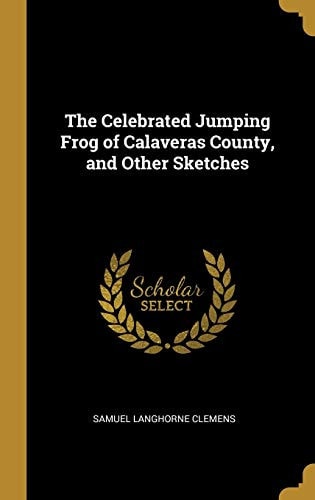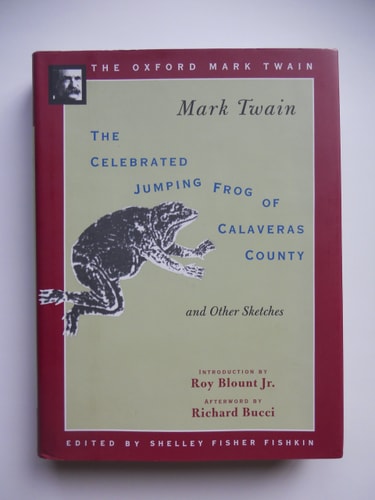
The Celebrated Jumping Frog of Calaveras County, and Other Sketches
0
0
As an Amazon Associate and affiliate partner, Menrva Books earns from qualifying purchases. Learn more
Author Description
Featuring 27 sketches the author wrote while living in California and Nevada, Mark Twain's first book, The Celebrated Jumping Frog of Calaveras County, was published in May 1867, and has been out of print for well over a century. As Roy Blount Jr. observes in his introduction, "Jumping Frog is not just the seed from which the Mark Twain empire sprang, it is his most devilish and quicksilver book, the one that made the fewest concessions to the book-buying market of the day--the work of a man who had profited, artistically, from the company of roughnecks." In his Afterword, Richard Bucci notes that "Mark Twain rebelled against everything that was obscure in art, and everywhere sought to deepen and broaden his audience. His cause was not merely to deflate and criticize, but to create, in a new and democratic artistic language. The Jumping Frog book is only a small moment on his path to remaking American fiction, but it is the beginning moment--reason enough to justify the book's reappearance now, after one hundred twenty five years. Grand historical significance aside, however, not a few of the sketches in this book still sparkle with their original humor and insight into the human condition."
Menrva's Summary
THE PULSE
A collection of sketches captures the absurdity of frontier life through the lens of a narrator navigating the tall tales of the American West. The protagonist encounters various eccentric characters who operate within the rugged, unpredictable social landscape of California and Nevada. These stories utilize a frame narrative structure, often contrasting the refined sensibilities of the narrator with the colorful, exaggerated vernacular of the local storytellers. The primary conflict arises from the friction between the mundane expectations of the observer and the chaotic, often illogical reality of the frontier world.
INSIDE THE PAGES
- Use of the frame narrative technique to introduce local legends
- Heavy reliance on regional dialect and colloquial speech patterns
- Satirical commentary on the social norms of the 19th-century American West
- Episodic structure allowing for diverse character studies
- Integration of tall tale traditions into written prose
- Focus on the irony inherent in human behavior and social interactions
- Exploration of the clash between Eastern sophistication and Western pragmatism
- Stylistic experimentation that laid the groundwork for later American realism
THE COLLECTIVE ECHO
Readers and critics frequently highlight this collection as the foundational text for understanding the evolution of Mark Twain's distinct literary voice. Discussion often centers on the author's ability to elevate regional folklore into a sophisticated form of social critique. Many observers note that the pacing remains brisk, reflecting the oral tradition from which these sketches were derived. The balance between character-driven humor and sharp observation of the human condition continues to generate interest among scholars of American letters. Readers often find that the work serves as a vital entry point for those interested in the transition of American fiction toward a more democratic and accessible language.
Page Count:
288
Publication Date:
1996-12-05
Publisher:
Oxford University Press
ISBN-10:
0195101316
ISBN-13:
9780195101317
Humor
Satire
Classic Literature
American
Short Stories