Religion, the Missing Dimension of Statecraft
0
0
As an Amazon Associate and affiliate partner, Menrva Books earns from qualifying purchases. Learn more
Author Description
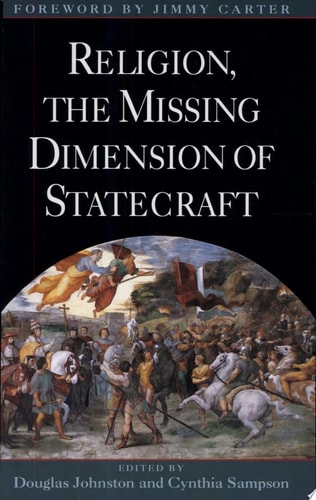
As the Cold War era becomes history, we are entering an age when international conflict is increasingly based on racial, ethnic, national, and religious clashes--the most intractable sources of conflict, and those with which conventional diplomacy is least suited to deal. The particularly American tendency to separate political from spiritual life often tends to ignore a vital aspect of international relations--one that can be a powerful tool in negotiations. Religion plays a crucial role in many international conflicts, yet for the most part, diplomacy either ignores or misunderstands its role.This unified collection of case studies and theoretical pieces attempts to restore this missing dimension to its rightful place in the conduct of international diplomacy. Sponsored by the Center for Strategic and International Studies in Washington, D.C., this study offers the first systematic account of modern cases in which religious or spiritual factors have played a helpful role in preventing or resolving conflict and achieving non-violent socio-political change. Written by a distinguished roster of scholars, the cases presented span the globe, with examples from Europe, Central America, Asia, and Africa. Additional essays summarize the findings of these case studies to bring out their implications for foreign policy and the religious community.In the Foreword, former President Jimmy Carter states that the book "poses a challenge to diplomats and politicians, religious figures and laypersons, analysts and academics alike." Conceived to help call attention to and reinforce the positive contribution that religious and spiritual influences can bring to peacemaking, this important study offers practical guidelines for the future application of this kind of peacemaking in existing and incipient conflict situations.
Menrva's Summary
THE THESIS
This work investigates how religious and spiritual dimensions, frequently overlooked by conventional diplomacy, can serve as effective tools in resolving international conflicts. The authors, Cynthia Sampson and Douglas Johnston, compile a series of theoretical essays and empirical case studies to argue that the secular bias in modern statecraft limits the efficacy of foreign policy. By examining global instances where faith-based actors influenced peace processes, the book provides a framework for integrating religious considerations into the practice of international relations.
THE SCOPE MAP
What You Will Find
- Case studies covering conflict resolution in Europe, Central America, Asia, and Africa.
- Theoretical analysis of the intersection between spiritual life and political statecraft.
- Practical guidelines for diplomats and policymakers to engage religious actors in peace negotiations.
- Evidence-based arguments regarding the role of non-violent socio-political change driven by religious influence.
THE AUTHORITY PERSPECTIVE
Experts and academics recognize this text as a foundational contribution to the study of religion in international affairs. Readers frequently note the clarity of the case studies, which provide a necessary bridge between abstract political theory and the practical realities of global diplomacy.
Page Count:
368
Publication Date:
1995-10-19
Publisher:
Oxford University Press
ISBN-10:
0195102800
ISBN-13:
9780195102802
Religion
Conflict Resolution
International relations
Diplomacy
Sociology
International Affairs
Community Tags
Similar Books