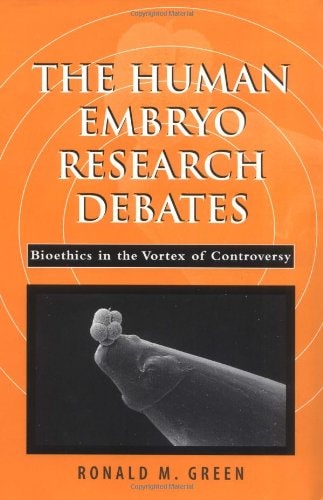
The Human Embryo Research Debates: Bioethics in the Vortex of Controversy
0
0
As an Amazon Associate and affiliate partner, Menrva Books earns from qualifying purchases. Learn more
Author Description
Research on the early human embryo has long been recognized as essential to progress in a host of biomedical areas from reproductive medicine to the treatment of pediatric cancers. Now, with the possibility of stem cell research and cell replacement therapies, embryo research holds out the promise of cures for many serious disease conditions such as diabetes and Alzheimer's disease. Despite its importance, however, human embryo research has met powerful opposition. Drawing on his experience as a member of the NIH's Human Embryo Research Panel, Green offers a first-hand account of the embryo research debates. In telling this story, he periodically pauses to reflect on some of the leading philosophical challenges posed by embryo research and new interventions at the start of life. Among the questions he examines are: What is the impact of new biological information on our thinking about life's beginning? May parents risk injuring a child in order to have it? What role should religion play in shaping biomedical policy in a controversial area like this? This is a fascinating insider's account of one of the most important, if unsuccessful, recent efforts to come to terms with a controversial area of scientific research.
Menrva's Summary
THE THESIS
This book investigates the ethical, religious, and scientific tensions surrounding human embryo research and the challenges of establishing public policy in a polarized landscape. Ronald M. Green, a scholar and former member of the NIH's Human Embryo Research Panel, utilizes his direct experience to analyze the intersection of biomedical advancement and moral philosophy. He presents a framework for understanding how scientific potential for curing diseases like diabetes and Alzheimer's conflicts with deeply held societal beliefs regarding the beginning of life.
THE SCOPE MAP
What You Will Find
- First-hand accounts of the NIH Human Embryo Research Panel proceedings.
- Philosophical analysis of moral status at the start of human life.
- Examination of the role of religious discourse in shaping secular biomedical policy.
- Ethical inquiry into parental decision-making and risk assessment in reproductive medicine.
THE AUTHORITY PERSPECTIVE
Experts recognize this work as a significant primary source for understanding the political and ethical hurdles of late 20th-century biotechnology regulation. Readers frequently note the balance between the author's personal narrative and the rigorous philosophical inquiry into the nature of human life.
Page Count:
256
Publication Date:
2001-06-28
Publisher:
Oxford University Press
ISBN-10:
0195109473
ISBN-13:
9780195109474
Science
Philosophy
Human Embryo
Public Policy
Medicine
Biotechnology
Bioethics
Community Tags
Similar Books