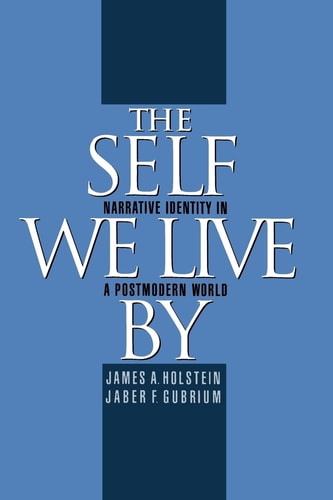
The Self We Live By: Narrative Identity in a Postmodern World
0
0
As an Amazon Associate and affiliate partner, Menrva Books earns from qualifying purchases. Learn more
Author Description
The self is a big story. In the early part of the century, pragmatists like William James, Charles Horton Cooley, and George Herbert Mead turned away from the transcendental self of philosophical reflection to formulate the new concept of an empirical self—the notion that who and what we are is established in everyday interaction. The self was now a social structure, as Mead put it, even if it was located within the individual. The story has changed dramatically since then. Today, according to some postmodern critics, the self has been cast adrift on a sea of disparate images. It’s just one swirling representation among others, bandied about the frenzy of a media-driven society. At the turn of the 21st century, the self has lost its traditional groundings and fizzled empirically. The self's very existence is seriously being questioned. The Self We Live By resurrects the big story by taking issue with this account. Holstein and Gubrium have crafted a comprehensive discussion that traces a different course of development, from the early pragmatists to contemporary constructionist considerations, rescuing the self from the scrap-heap of postmodern imagery. Glimpses of renewal are located in a new kind of ending, centered in an institutional landscape of diverse narratives, articulated in relation to an expanding horizon of identities. Not only is there a new story of the self, but we’re told that the self, itself, is narratively constructed. Yet as varied and plentiful as narrative identity has become, it’s disciplined by its social practices, which the authors discuss and illustrate in terms of the everyday technology of self construction. The empirical self, it turns out, has become more complex and varied than its formulators could have imagined.
Menrva's Summary
THE THESIS
This book investigates how the concept of the self has evolved from early pragmatist theory to contemporary postmodern discourse, ultimately arguing that the self remains a narratively constructed entity. Authors Jaber F. Gubrium and James A. Holstein, both established sociologists, utilize a constructionist framework to challenge the postmodern assertion that the self has dissolved into a fragmented collection of media-driven images. By synthesizing historical pragmatist thought with modern institutional analysis, they propose that identity is actively built through everyday social practices and narrative structures.
THE SCOPE MAP
What You Will Find
- A historical overview of the empirical self from William James to George Herbert Mead.
- An analysis of the impact of media-driven imagery on modern identity formation.
- A theoretical framework for understanding the 'everyday technology' of self-construction.
- Case studies illustrating how institutional landscapes shape individual narrative identities.
THE AUTHORITY PERSPECTIVE
Scholars and students of sociology frequently cite this work as a foundational text for understanding narrative identity within constructionist theory. Readers often note the academic density of the prose, which provides a rigorous examination of how social practices discipline the formation of the self.
Page Count:
288
Publication Date:
1999-07-29
Publisher:
Oxford University Press
ISBN-10:
0195119290
ISBN-13:
9780195119299
Philosophy
Psychology
Sociology
Social Science
Postmodernism
Community Tags
Similar Books