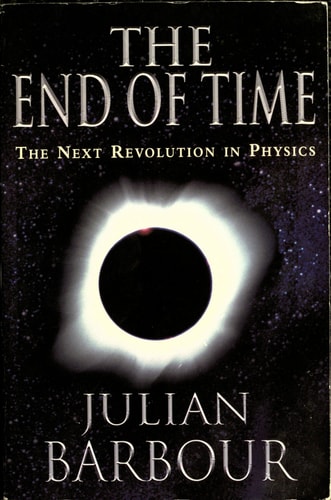
The End of Time: The Next Revolution in Physics
0
0
As an Amazon Associate and affiliate partner, Menrva Books earns from qualifying purchases. Learn more
Author Description
Richard Feynman once quipped: "Time is what happens when nothing else does." But Julian Barbour disagrees: if nothing happened, if nothing changed, time would stop. For time is nothing but change. It is change that we perceive occurring all around us, not time. In fact, time doesn't exist.In this highly provocative volume, Barbour presents the basic evidence for the nonexistence of time, explaining what a timeless universe is like and showing how the world will nonetheless be experienced as intensely temporal. It is a book that strikes at the heart of modern physics, that casts doubt on Einstein's greatest contribution, the space-time continuum, but that also points to the solution of one of the great paradoxes of modern science: the chasm between classical and quantum physics. Indeed, Barbour argues that the unification of Einstein's general relativity and quantum mechanics may well spell the end of time--time will cease to have a role in the foundations of physics.Barbour writes with remarkable clarity, as he ranges from ancient philosophers such as Heraclitus and Parmenides, to such giants of science as Galileo, Newton, and Einstein, to the work of contemporary physicists such as John Wheeler, Roger Penrose, and Steven Hawking. Along the way, the author treats us to an enticing look at some of the mysteries of the universe and presents intriguing ideas about multiple worlds, time travel, immortality, and, above all, the illusion of motion.Turning our understanding of reality inside-out, The End of Time is a vibrantly written and revolutionary book.
Menrva's Summary
THE THESIS
Does time exist as a fundamental property of the universe, or is it merely an illusion generated by our perception of change? Julian B. Barbour, a theoretical physicist, challenges the foundational role of time in modern physics by proposing a timeless universe. Drawing on historical philosophical perspectives and contemporary quantum mechanics, Barbour argues that the space-time continuum is a construct that obscures the true nature of reality, suggesting that a unified theory of physics requires the total removal of time from its core equations.
THE SCOPE MAP
What You Will Find
- A comprehensive critique of the space-time continuum as established by Einstein's general relativity.
- Theoretical frameworks for a timeless universe where change is the only observable constant.
- Historical analysis of scientific thought from Heraclitus and Parmenides to Newton and Hawking.
- Proposed solutions for reconciling the long-standing conflict between classical physics and quantum mechanics.
THE AUTHORITY PERSPECTIVE
Experts and readers alike recognize this work as a dense, intellectually demanding exploration of theoretical physics that challenges conventional scientific paradigms. While the prose is noted for its clarity, the complex subject matter makes it a challenging read for those without a background in physics or philosophy.
Page Count:
384
Publication Date:
2000-01-27
Publisher:
Oxford University Press
ISBN-10:
0195117298
ISBN-13:
9780195117295
Science
Non-Fiction
Earth Sciences
Relativity
Physics
Space and time
Cosmology
Community Tags
Similar Books