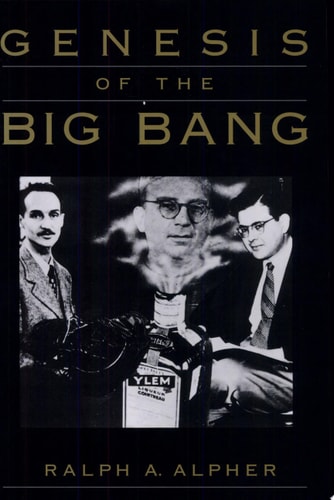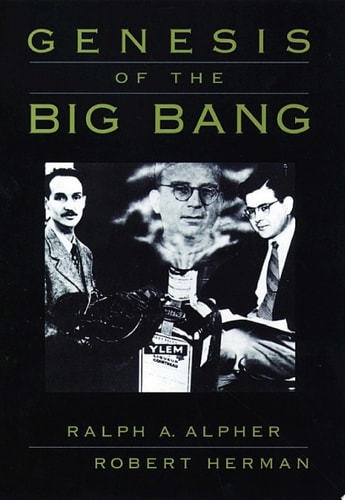
Genesis of the Big Bang
0
0
As an Amazon Associate and affiliate partner, Menrva Books earns from qualifying purchases. Learn more
Author Description
The authors of this volume have been intimately connected with the conception of the Big Bang model since 1947. Following the late George Gamow's ideas in 1942 and more particularly in 1946 that the early universe was an appropriate site for the synthesis of the elements, they became deeply involved in the question of cosmic nucleosynthesis and particularly the synthesis of the light elements. In the course of this work they developed a general relativistic model of the expanding universe with physics folded in, which led in a progressive, logical sequence to our prediction of the existence of a present cosmic background radiation some seventeen years before the observation of such radiation was reported by Penzias and Wilson. In addition, they carried out with James W. Follin, Jr., a detailed study of the physics of what was then considered to be the very early universe, starting a few seconds after the Big Bang, which still provides a methodology for studies of light element nucleosynthesis. Because of their involvement, they bring a personal perspective to the subject. They present a picture of what is now believed to be the state of knowledge about the evolution of the expanding universe and delineate the story of the development of the Big Bang model as they have seen and lived it from their own unique vantage point.
Menrva's Summary
THE THESIS
This volume investigates the historical development and theoretical foundations of the Big Bang model through the personal experiences of two primary contributors to the field. Ralph A. Alpher and Robert Herman, both pioneers in the study of cosmic nucleosynthesis, utilize their direct involvement in the research conducted during the 1940s to explain the evolution of the expanding universe model. They argue that the prediction of cosmic background radiation was a logical consequence of applying general relativity to early universe physics, providing a detailed account of how these scientific insights were formulated decades before their empirical confirmation.
THE SCOPE MAP
What You Will Find
- Historical account of the development of the Big Bang model starting from 1942.
- Theoretical framework for cosmic nucleosynthesis and the synthesis of light elements.
- Methodology for analyzing the physics of the universe seconds after the Big Bang.
- Personal perspectives on the collaborative research environment involving George Gamow and James W. Follin, Jr.
Scope Limits
- The text does not provide a comprehensive overview of modern post-1990s cosmological discoveries.
- It focuses primarily on the specific contributions of the authors rather than a broad survey of all competing cosmological theories.
THE AUTHORITY PERSPECTIVE
Experts recognize this work as a primary source document that offers unique insight into the early development of modern cosmology. Readers frequently note the technical density of the prose, which assumes a foundational understanding of physics and relativistic models.
Page Count:
222
Publication Date:
2001-01-01
Publisher:
Oxford University Press
ISBN-10:
0190283211
ISBN-13:
9780190283216
Science
Science History
Biography Autobiography
Cosmology
Physics
Astrophysics
Earth Sciences
English & College Success
English
Space Science