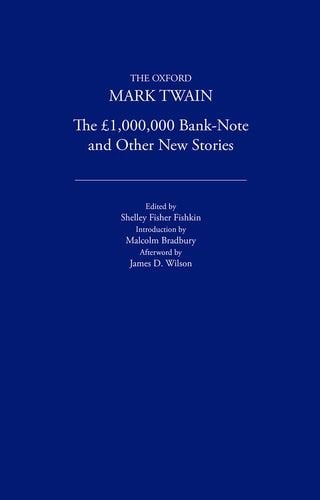
The £1,000,000 Bank-Note and Other New Stories
0
0
As an Amazon Associate and affiliate partner, Menrva Books earns from qualifying purchases. Learn more
Author Description
A delightful collection of diverse tales, ranging from short stories and personal essays to literary criticism and travel pieces, The £1,000,000 Bank-Note gathers together nine works, many of which are now unobtainable elsewhere, that testify to the range of Twain's humor and the diversity of his interests. It was published in 1893, in a disastrous decade for the United States, a time marked by doubt and waning optimism, rapid immigration, labor problems, unchecked Social Darwinism, and the rise of political violence and social protest. It was also a difficult time for Twain personally, as he was forced into bankruptcy and devastated by the death of his favorite daughter, Suzy. Yet the title story still brims with confidence and optimism, marking the moment of hope just before Twain turned to the grim stories of his later years. "The £1,000,000 Bank-Note" charts the magical rags-to-riches ascent of a virtuous and resourceful mining broker's clerk from San Francisco who arrives in London with a single dollar in his pocket, and proceeds to ultimate and splendid financial success and fame in London society -- a paean to ingenuity and a celebration of its cunning confidence-man narrator. The other pieces range from "Mental Telegraphy," a serious essay reflecting Twain's continuing interest in the occult -- he and his wife would later try several seances, poignantly and unsuccessfully, to contact their daughter Suzy -- to a tongue-in-cheek "Petition to the Queen of England" for relief from taxes. Readers will also find several of Twain's famously engaging travel essays, combining autobiographical reminiscence, tall tales, and ruminations on society and culture in pieces on the new city of Berlin, advances in transatlantic travel, and, in "Playing Courier," a brilliant comedy of confusion at the common frustrations of international travel. A charming collection of tales that cover the wide range of Twain's diverse interests.
Menrva's Summary
THE PULSE
A penniless clerk in London finds his life transformed when two wealthy brothers bet on whether a man can survive for a month with nothing but a million-pound bank note. Twain presents a narrative of social maneuvering and the absurdity of wealth, utilizing a lighthearted tone that contrasts with the protagonist's precarious situation. The story follows the clerk as he navigates high society, relying on the psychological power of the note rather than its actual monetary value to secure credit and status. This collection serves as a bridge between Twain's earlier, more optimistic works and the darker, more cynical themes that would define his later literary output.
INSIDE THE PAGES
- Use of satirical commentary on class structures and social perception
- Integration of tall tale elements within realistic urban settings
- Exploration of the psychological impact of extreme wealth on social interactions
- Inclusion of autobiographical essays detailing personal observations on travel
- Examination of occult interests through the lens of 19th-century skepticism
- Deployment of epistolary and essayistic formats to vary narrative voice
- Focus on the ingenuity of the common man against institutional rigidity
- Reflection of the socio-political anxieties prevalent in the 1890s
THE COLLECTIVE ECHO
Readers frequently highlight the collection as a vital window into the transitional period of Twain's career. Discussion often centers on the contrast between the whimsical nature of the title story and the more somber, introspective tone of the accompanying essays. Critics note that while the humor remains sharp, the underlying themes of financial instability and personal loss provide a poignant context for the work. The balance between lighthearted comedy and serious social critique is often cited as the primary reason for the collection's enduring appeal to scholars and casual readers alike.
Page Count:
352
Publication Date:
1997-03-06
Publisher:
Oxford University Press
ISBN-10:
0195114132
ISBN-13:
9780195114133
Travel
Humor
Satire
Essays
Classic Literature
Short Stories
Community Tags
Other Editions(2)
Similar Books







Reader Comments
Share Your Thoughts
No comments yet. Be the first to share your thoughts!