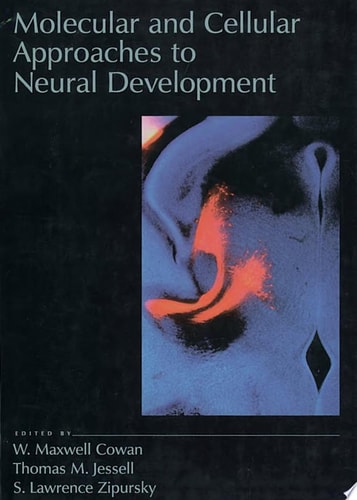
Molecular and Cellular Approaches to Neural Development
0
0
As an Amazon Associate and affiliate partner, Menrva Books earns from qualifying purchases. Learn more
Author Description
Comprehensive, up-to-date and authoritative, this volume covers all the recent advances in understanding the early events of neural development at the molecular and cellular levels. The authors detail the applications of molecular genetic methods to the study of neural induction, neuronal phenotypes and processes, and the formation of specific patterns of connections. They analyze the new information generated through modern techniques for identifying, cloning, deleting and introducing specific genes, for labeling neuronal or glial precursors, and for imaging individual neurons or parts of neurons.Other chapters focus on the increasing use of a variety of model organisms: fruit flies, nematode worms, zebra fish, xenopus frogs, chicks, and mice. The improved conservation of DNA and protein sequences, and the availability of gene and protein databases have made it possible to rapidly identify gene homologues in organisms sometimes separated by hundreds of millions of years of evolution. This volume features several chapters co-authored by investigators one of whom works on vertebrates and the other on invertebrates. They demonstrate clearly that although the nervous systems of a fruit fly and a mouse, for example, are quite different in appearance and organization, many of the same molecular players and cellular processes are involved in their assembly. Molecular and Cellular Approaches to Neural Development will be of great practical interest to researchers, graduate students and post-doctoral fellows in developmental, cell and molecular biology, genetics, and neuroscience.
Menrva's Summary
THE THESIS
This volume investigates the molecular and cellular mechanisms that govern the early stages of neural development across diverse species. The authors, distinguished experts in developmental biology and neuroscience, synthesize recent advances in genetic methodology to explain how neural induction, phenotypic differentiation, and synaptic connectivity are established. By integrating data from both vertebrate and invertebrate models, the text provides a framework for understanding the conserved biological processes that drive nervous system assembly.
THE SCOPE MAP
What You Will Find
- Applications of molecular genetic methods including gene cloning, deletion, and expression analysis.
- Comparative analysis of neural development across model organisms such as Drosophila, C. elegans, zebrafish, Xenopus, chicks, and mice.
- Techniques for labeling neuronal precursors and high-resolution imaging of individual neurons.
- Discussion on the evolutionary conservation of DNA and protein sequences in neural development.
THE AUTHORITY PERSPECTIVE
Experts recognize this volume as a foundational resource for researchers and graduate students seeking to understand the intersection of genetics and neurobiology. Readers frequently note the technical density of the prose, which serves as a comprehensive reference for those working in developmental and molecular biology laboratories.
Page Count:
576
Publication Date:
1998-01-15
Publisher:
Oxford University Press
ISBN-10:
0195111664
ISBN-13:
9780195111668
Science
Cell Biology
Genetics
Developmental Biology
Neuroscience
Community Tags
Similar Books