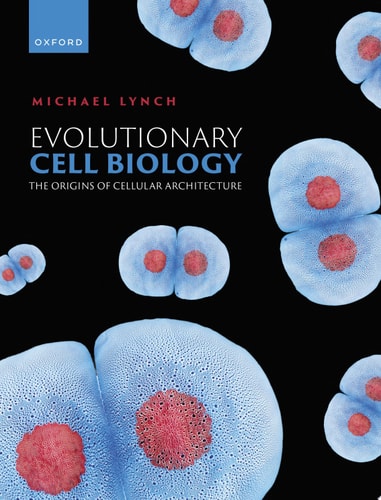
Evolutionary Cell Biology: The Origins of Cellular Architecture
0
0
As an Amazon Associate and affiliate partner, Menrva Books earns from qualifying purchases. Learn more
Author Description
The fields of molecular evolution, genome evolution, and evolutionary genetics are now well-established. Remarkably, however, although all evolutionary modifications begin at the cellular level, and despite the advances made in cell biology and microbiology over the past few decades, there is as yet no recognised discipline of evolutionary cell biology. The goal of this book is to help establish the foundations for this emerging field. Its principal aims are twofold: firstly, to promote an understanding among evolutionary biologists as to why the cellular details matter if we are to understand the mechanisms of evolution; secondly, to make clear to non-evolutionary biologists - cell biologists in particular - that evolution is not just a matter of natural selection and optimization, but a process whose reach depends on other population genetic features such as mutation, recombination, and random genetic drift.Although there are many excellent books on cell biology, microbiology, and biophysics, almost no attention is given to evolution. Likewise, although there are numerous evolutionary biology books on the market, none of them gives more than passing attention to details at the cellular level. Thus Evolutionary Cell Biology is genuinely novel, offering a broader understanding of evolutionary processes and an appreciation for the many interesting problems that remain to be solved at the cellular and subcellular levels.This advanced textbook is aimed at both cell biologists and evolutionary biologists. It will be accessible to upper-level undergraduates in biology, and certainly to graduate students in all areas of the life sciences. Professionals from a wide range of fields - cell biology, microbiology, evolution, biophysics, biochemistry, and mathematics - will be exposed to entirely new ideas not traditionally covered in their primary fields of expertise.
Menrva's Summary
THE THESIS
This book investigates the foundational principles required to establish evolutionary cell biology as a distinct, recognized discipline within the biological sciences. Michael J. Lynch, a prominent researcher in evolutionary genetics, argues that cellular mechanisms are the primary site of evolutionary change. He posits that current biological study suffers from a disconnect between evolutionary theory and cellular mechanics, and he proposes a framework that integrates population genetics—specifically mutation, recombination, and genetic drift—with cellular architecture to explain biological complexity.
THE SCOPE MAP
What You Will Find
- Theoretical framework for integrating population genetics with cell biology
- Analysis of cellular and subcellular evolution
- Examination of non-adaptive evolutionary processes
Scope Limits
- Does not provide a comprehensive survey of standard cell biology or microbiology
- Does not focus on natural selection as the sole driver of evolutionary change
THE AUTHORITY PERSPECTIVE
Experts identify this text as a foundational resource for bridging the gap between evolutionary theory and cellular biology. Readers frequently note the high level of academic density, making it most suitable for graduate students and professional researchers in the life sciences.
Page Count:
656
Publication Date:
2024-01-01
Publisher:
Oxford University Press
ISBN-10:
0192847287
ISBN-13:
9780192847287
Science
Biology
Genetics
Evolutionary Biology
Biophysics
Cell Biology
Community Tags
Similar Books