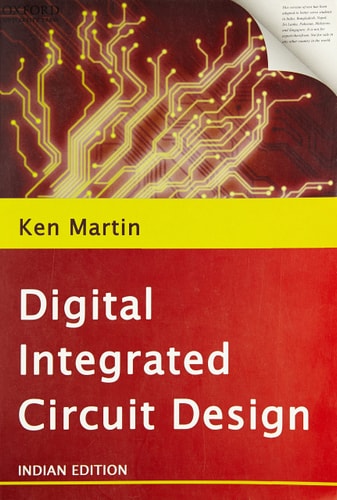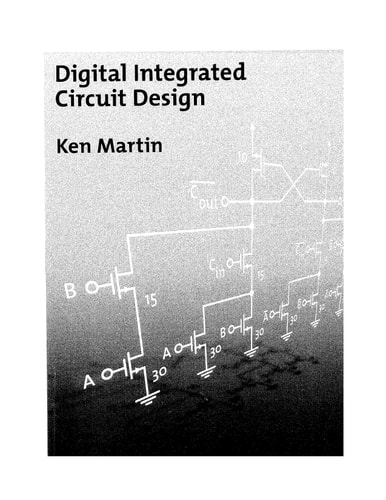
Digital Integrated Circuit Design
0
0
As an Amazon Associate and affiliate partner, Menrva Books earns from qualifying purchases. Learn more
Author Description
Working from the fundamentals of transistor-level design and building up to system-level considerations, Digital Integrated Circuit Design shows students with minimal background in electronics how to design state-of-the-art high performance digital integrated circuits. Ideal as an upper-level undergraduate text, it can also be used in first-year graduate courses and as a reference for practicing engineers.Digital Integrated Circuit Design:BL Presents transistor-level details first, building up to system considerationsBL Emphasizes CMOS technology but also includes in-depth explanations of designing in bipolar, BiCMOS, and GaAs technologiesBL Features modern, well-designed examples and problemsBL Covers important system-level considerations such as timing, pipelining, clock distribution, and system building blocks in detailBL Discusses key elements of semiconductor physics, integrated circuit processing, transistor-level design, logic-level design, system-level design, testing, and moreBL Provides physical and intuitive explanations throughoutBL Emphasizes conceptual thinking and design methodology over detailed circuit analysis techniques
Menrva's Summary
THE THESIS
This text investigates the methodologies required to design high-performance digital integrated circuits by bridging the gap between fundamental transistor physics and complex system-level architecture. Ken Martin, an expert in the field, provides a structured pedagogical framework that guides students from basic electronic principles to advanced design considerations. The book utilizes a bottom-up approach, ensuring that readers develop a robust conceptual understanding of CMOS, bipolar, BiCMOS, and GaAs technologies before addressing large-scale system integration.
THE SCOPE MAP
What You Will Find
- Comprehensive coverage of semiconductor physics and integrated circuit processing techniques.
- Detailed analysis of transistor-level and logic-level design methodologies.
- System-level considerations including timing, pipelining, and clock distribution strategies.
- Practical examples and problem sets designed to reinforce conceptual design thinking.
THE AUTHORITY PERSPECTIVE
Experts and educators frequently cite this text as a foundational resource for upper-level undergraduate and introductory graduate courses in electrical engineering. The prose is noted for its focus on physical intuition and design methodology, making it a reliable reference for both students and practicing engineers in the semiconductor industry.
Page Count:
560
Publication Date:
1999-09-30
Publisher:
Oxford University Press
ISBN-10:
0195125843
ISBN-13:
9780195125849
Engineering
textbook
Electronics
Integrated Circuits
Semiconductors
Computer Science