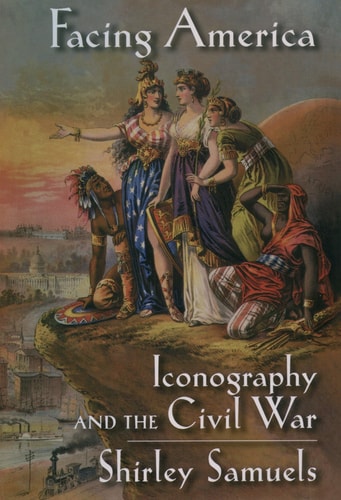
Facing America: Iconography and the Civil War
0
0
As an Amazon Associate and affiliate partner, Menrva Books earns from qualifying purchases. Learn more
Author Description
Facing America: Iconography and the Civil War investigates and explains the changing face of America during the Civil War. To conjure a face for the nation, author Shirley Samuels also explores the body of the nation imagined both physically and metaphorically, arguing that the Civil War marks a dramatic shift from identifying the American nation as feminine to identifying it as masculine. Expressions of such a change appear in the allegorical configurations of nineteenth-century American novels, poetry, cartoons, and political rhetoric. Because of the visibility of war's assaults on the male body, masculine vulnerability became such a dominant facet of national life that it practically obliterated the visibility of other vulnerable bodies. The simultaneous advent of photography and the Civil War in the nineteenth century may be as influential as the conjoined rise of the novel and the middle class in the eighteenth century. Both advents herald a changed understanding of how a transformative media can promote new cultural and national identities. Bodies immobilized because of war's practices of wounding and death are also bodies made static for the camera's gaze. The look of shock on the faces of soldiers photographed in order to display their wounds emphasizes the new technology of war literally embodied in the impact of new imploding bullets on vulnerable flesh. Such images mark both the context for and a counterpoint to the "look" of Walt Whitman as he bends over soldiers in their hospital beds. They also provide a way to interpret the languishing male heroes of novels such as August Evans's Macaria (1864), a southern elegy for the sundering of the nation. This book crucially shows how visual iconography affects the shift in postbellum gendered and racialized identifications of the nation.
Menrva's Summary
THE THESIS
This book investigates how the American Civil War catalyzed a fundamental shift in the national identity from a feminine to a masculine construct, reflected through visual and literary iconography. Author Shirley Samuels utilizes her expertise in American literature and cultural history to analyze how the physical trauma of war, captured by the emerging technology of photography, reshaped the perception of the American body politic. By examining the intersection of political rhetoric, literature, and visual media, the author argues that the vulnerability of the male body during the conflict permanently altered the gendered and racialized definitions of the nation in the postbellum era.
THE SCOPE MAP
What You Will Find
- Analysis of nineteenth-century American novels, poetry, and political cartoons as primary source material.
- Examination of the impact of early photography on the public perception of war and physical trauma.
- Investigation into the transition of national symbolism from feminine allegories to masculine representations.
- Interpretation of literary works such as Augusta Evans's Macaria alongside historical accounts of battlefield injuries.
THE AUTHORITY PERSPECTIVE
Scholars and historians frequently cite this work as a significant contribution to the study of nineteenth-century American visual culture and gender politics. Readers often note the academic density of the prose, which provides a rigorous framework for understanding the relationship between war, technology, and national identity.
Page Count:
200
Publication Date:
2004-03-25
Publisher:
Oxford University Press
ISBN-10:
0195128974
ISBN-13:
9780195128970
History
Photography
Sex Role
In literature
In art
English
Nationalism
English & College Success
Art History
Gender Studies
Community Tags
Similar Books