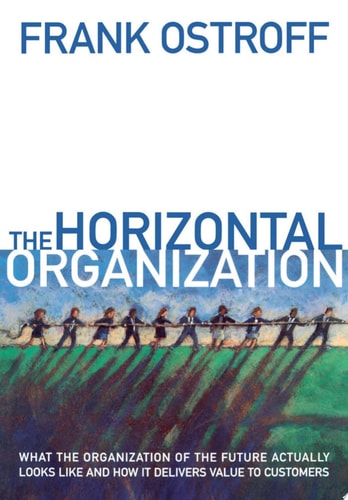
The Horizontal Organization: What the Organization of the Future Actually Looks Like and How it Delivers Value to Customers
0
0
As an Amazon Associate and affiliate partner, Menrva Books earns from qualifying purchases. Learn more
Author Description
The vertical/functional hierarchy has been the mainstay of business since the industrial revolution. But it has its problems. In fact, the vertical design all but guarantees fragmented tasks, overspecialization, fiefdoms, turf wars, the urge to control from the top--all the negatives that foster organizational paralysis. In The Horizontal Organization, Frank Ostroff provides executives with the first truly viable alternative to the age-old vertical alignment. Indeed, he offers nothing less than the first full view of what the organization of the future looks like and how it works.The concept of horizontal organization has been hailed in Fortune as "a model corporation for the next fifty years" and in a Business Week cover story as "the real thing." But until now, management books have offered only piecemeal accounts of what the organization of the future might look like. Ostroff, a key developer of the concept of the horizontal organization, offers the first workable road map. He describes what the horizontal organization is, what it looks like, why it is important, how it helps improve performance, where it is appropriate, and how to develop it. The book contains real case examples that show how major international corporations (and one federal agency) have used Ostroff's concepts to meet their competitive goals. For instance, we see how Ford Motor Company's Customer Service Division turned to the horizontal organization to meet a highly ambitious goal--to get the customer's car fixed right, on time, the first time, at a competitive price, in convenient locations. We see how a horizontal design radically improved the performance of OSHA (the federal agency that oversees occupational safety), transforming it from a bureaucratic enforcer of regulations to a proactive problem-solver in a concerted effort to improve working conditions and save lives. And we see how Xerox combined both vertical and horizontal designs successfully, a case that underscores when a firm can
Menrva's Summary
THE THESIS
This book investigates the limitations of traditional vertical hierarchies and proposes the horizontal organization as a superior model for delivering customer value. Frank Ostroff, a consultant and key architect of the horizontal design concept, utilizes his extensive experience in organizational restructuring to argue that functional silos impede efficiency. He presents a comprehensive framework for transitioning from fragmented, task-based management to process-oriented structures that prioritize customer outcomes and cross-functional collaboration.
THE SCOPE MAP
What You Will Find
- A detailed definition and structural blueprint of the horizontal organization model.
- Methodologies for identifying and managing core business processes rather than functional departments.
- Case studies from major international corporations and federal agencies, including Ford Motor Company and OSHA.
- Strategic guidance on when to implement horizontal designs versus maintaining hybrid vertical-horizontal structures.
THE AUTHORITY PERSPECTIVE
Management experts recognize this work as a foundational text for understanding process-based organizational design. Readers frequently note the practical application of the case studies, which help bridge the gap between theoretical management concepts and real-world implementation.
Page Count:
272
Publication Date:
1999-02-04
Publisher:
Oxford University Press
ISBN-10:
0195121384
ISBN-13:
9780195121384
Business
Leadership
Management
Corporate Strategy
Teams In The Workplace
Community Tags
Other Editions(2)
Similar Books









Reader Comments
Share Your Thoughts
No comments yet. Be the first to share your thoughts!