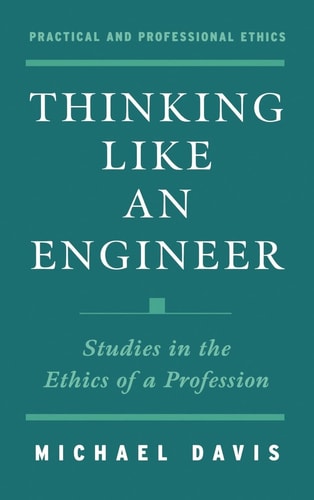
Thinking Like an Engineer: Studies in the Ethics of a Profession
0
0
As an Amazon Associate and affiliate partner, Menrva Books earns from qualifying purchases. Learn more
Author Description
Michael Davis, a leading figure in the study of professional ethics, offers here both a compelling exploration of engineering ethics and a philosophical analysis of engineering as a profession. After putting engineering in historical perspective, Davis turns to the Challenger space shuttle disaster to consider the complex relationship between engineering ideals and contemporary engineering practice. Here, Davis examines how social organization and technical requirements define how engineers should (and presumably do) think. Later chapters test his analysis of engineering judgement and autonomy empirically, engaging a range of social science research including a study of how engineers and managers work together in ten different companies.
Menrva's Summary
THE THESIS
This book investigates the fundamental question of how engineering ethics functions as a professional practice within the constraints of modern social and corporate structures. Michael Davis, a prominent scholar in professional ethics, utilizes a blend of historical analysis and empirical research to define the moral obligations inherent in the engineering profession. By examining the tension between technical requirements and organizational pressures, Davis provides a framework for understanding how engineers exercise judgment and maintain autonomy in complex work environments.
THE SCOPE MAP
What You Will Find
- Historical evolution of engineering as a distinct profession
- Philosophical analysis of engineering judgment and professional autonomy
- Case study of the Challenger space shuttle disaster as an ethical touchstone
- Empirical research on the collaborative dynamics between engineers and managers across ten diverse companies
THE AUTHORITY PERSPECTIVE
Experts recognize this work as a foundational text for understanding the intersection of moral philosophy and engineering practice. Readers frequently note the academic density of the prose, which provides a rigorous examination of professional responsibility in corporate settings.
Page Count:
256
Publication Date:
1998-06-18
Publisher:
Oxford University Press
ISBN-10:
0195120515
ISBN-13:
9780195120516
Philosophy
Social Science
Professional Ethics
Engineering
Ethics