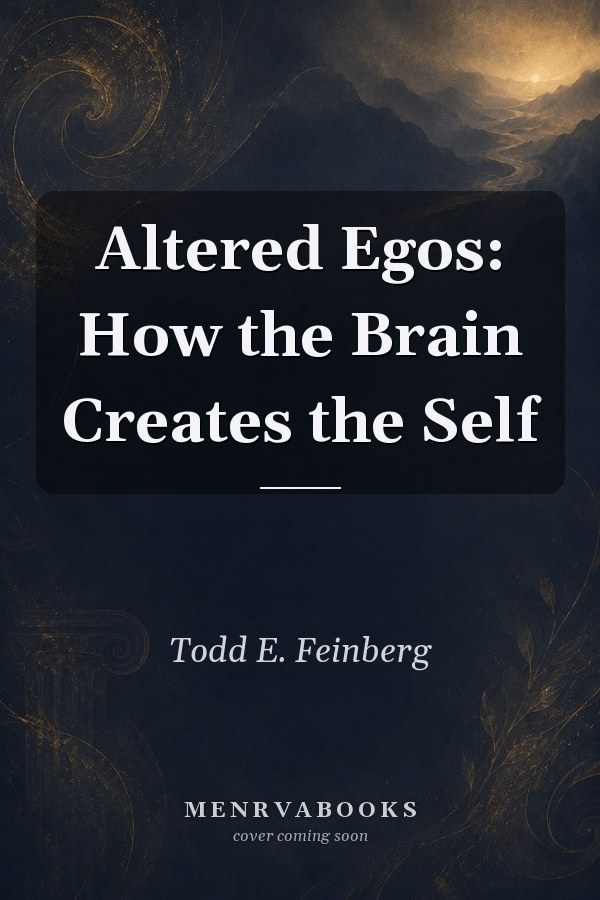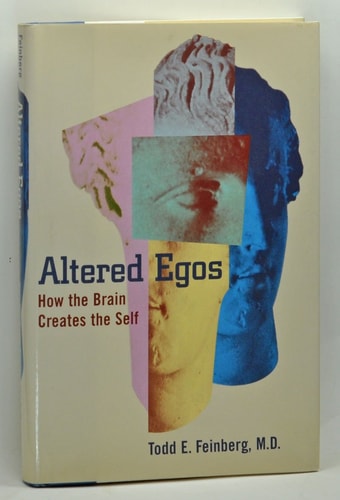
Altered Egos: How the Brain Creates the Self
0
0
As an Amazon Associate and affiliate partner, Menrva Books earns from qualifying purchases. Learn more
Author Description
It may be the deepest mystery of philosophy, psychology, and neuroscience: how does the brain unite to create the self, the subjective "I"? In Altered Egos, Dr. Todd Feinberg presents a new theory of the self, based on his first-hand experience as both a psychiatrist and neurologist.Feinberg first introduces the reader to dozens of intriguing cases of patients whose disorders have resulted in what he calls "altered egos": a change in the brain that transforms the boundaries of the self. He describes patients who suffer from "alien hand syndrome" where one hand might attack the patient's own throat, patients with frontal lobe damage who invent fantastic stories about their lives, paralyzed patients who reject and disown one of their limbs. Feinberg argues that the brain damage suffered by these people has done more than simply impair certain functions--it has fragmented their sense of self. After illustrating how these patients provide a window into the self and the mind, the author presents a new model of the self that links the workings of the brain with unique and personal features of the mind, such as meaning, purpose, and being. Drawing on his own and other evidence, Feinberg explains how the unified self, while not located in one or another brain region, arises out of the staggering complexity and number of the brain's component parts.Lucid, insightful, filled with fascinating case studies and provocative new ideas, Altered Egos promises to change the way we think about human consciousness and the creation and maintenance of human identity.
Menrva's Summary
THE THESIS
How does the physical architecture of the brain generate the unified, subjective experience of the self? Dr. Todd Feinberg, a practicing psychiatrist and neurologist, utilizes his clinical observations of patients with neurological disorders to propose a novel model of selfhood. He argues that the self is not localized to a single brain region but emerges from the complex integration of the brain's various component parts, bridging the gap between biological function and personal identity.
THE SCOPE MAP
What You Will Find
- Clinical case studies of patients with alien hand syndrome and frontal lobe damage.
- An analysis of how brain damage fragments the subjective sense of self.
- A theoretical framework linking neural complexity to abstract concepts like meaning and purpose.
- Evidence-based exploration of the relationship between neurological function and human consciousness.
THE AUTHORITY PERSPECTIVE
Experts and readers alike recognize this work as a significant contribution to the intersection of neurology and philosophy. The text is noted for its accessible synthesis of complex clinical data and its ability to ground abstract questions of identity in tangible neurological reality.
Page Count:
205
Publication Date:
2001-01-15
Publisher:
Oxford University Press
ISBN-10:
019513625X
ISBN-13:
9780195136258
Philosophy
Psychology
Neurology
Personality
Ego Psychology
Self
Neuroscience
Brain