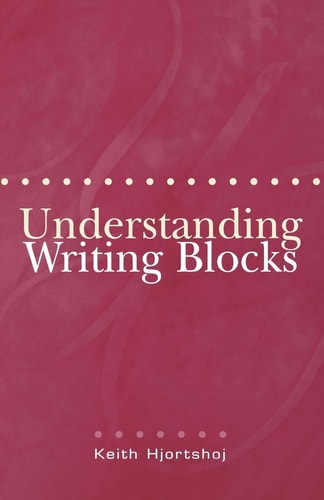
Understanding Writing Blocks
0
0
As an Amazon Associate and affiliate partner, Menrva Books earns from qualifying purchases. Learn more
Author Description
Why do capable students and scholars fail to complete writing projects? What are "writing blocks," and how can writers overcome them? Why are writing blocks more common for advanced and experienced writers who are not supposed to need help? And why are they more common in the humanities than in the sciences? Keith Hjortshoj answers these and other questions in Understanding Writing Blocks. This book demystifies the causes of writing blocks, which are often ignored, misunderstood, or attributed to obscure psychological disorders. Hjortshoj examines blocks instead as real writing problems arising from specific misconceptions, writing behaviors, and rhetorical factors present at different stages of the writing process. In a lively and informative style, he defines the nature of writing blocks, examines their causes, and offers advanced undergraduates, graduate students, and professional writers the diagnostic tools and strategies necessary for getting their work done. Although appropriate for any writing course, Understanding Writing Blocks targets advanced composition students and graduate writers who are most likely to encounter immobilizing obstacles, and whose experience supports the author's assertion that a writing block is usually "an affliction of the good writer." Hjortshoj draws his material and evidence from extensive research, interviews, and consultations with blocked writers from his twenty-five years of teaching. Especially helpful to students working on dissertations and other complex projects, Understanding Writing Blocks illuminates the factors that undermine writing ability in a wide range of endeavors.
Menrva's Summary
THE THESIS
What are the underlying causes of writing blocks, and how can experienced writers systematically overcome these barriers to complete their work? Keith Hjortshoj, a veteran educator with twenty-five years of experience, argues that writing blocks are not merely psychological failings but are instead logical consequences of specific misconceptions and rhetorical challenges. By analyzing the habits of advanced students and scholars, he provides a framework for identifying the structural and behavioral roots of these obstacles. The book serves as a diagnostic guide for writers navigating complex projects like dissertations.
THE SCOPE MAP
What You Will Find
- Analysis of writing blocks specific to advanced undergraduates and graduate students
- Examination of the disparity in writing block frequency between humanities and sciences
- Diagnostic tools for identifying behavioral and rhetorical misconceptions
- Practical strategies for overcoming immobilization during the writing process
THE AUTHORITY PERSPECTIVE
Experts and educators frequently cite this work as a foundational resource for graduate students struggling with long-form academic projects. Readers often note that the prose is accessible yet rigorous, providing a clear methodology for addressing the unique pressures faced by experienced writers.
Page Count:
160
Publication Date:
2001-02-22
Publisher:
Oxford University Press
ISBN-10:
0195141369
ISBN-13:
9780195141368
Psychology
Non-Fiction
Education
Writing Skills
Academic writing
Community Tags
Similar Books