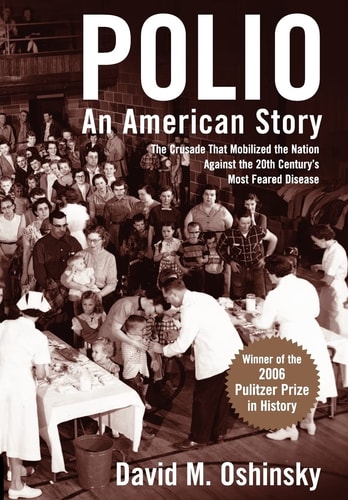
Polio: An American Story
0
0
As an Amazon Associate and affiliate partner, Menrva Books earns from qualifying purchases. Learn more
Author Description
All who lived in the early 1950s remember the fear of polio and the elation felt when a successful vaccine was found. Now David Oshinsky tells the gripping story of the polio terror and of the intense effort to find a cure, from the March of Dimes to the discovery of the Salk and Sabin vaccines--and beyond. Here is a remarkable portrait of America in the early 1950s, using the widespread panic over polio to shed light on our national obsessions and fears. Drawing on newly available papers of Jonas Salk, Albert Sabin and other key players, Oshinsky paints a suspenseful portrait of the race for the cure, weaving a dramatic tale centered on the furious rivalry between Salk and Sabin. Indeed, the competition was marked by a deep-seated ill will among the researchers that remained with them until their deaths. The author also tells the story of Isabel Morgan, perhaps the most talented of all polio researchers, who might have beaten Salk to the prize if she had not retired to raise a family. As backdrop to this feverish research, Oshinsky offers an insightful look at the National Foundation for Infantile Paralysis, which was founded in the 1930s by FDR and Basil O'Connor. The National Foundation revolutionized fundraising and the perception of disease in America, using "poster children" and the famous March of Dimes to raise hundreds of millions of dollars from a vast army of contributors (instead of a few well-heeled benefactors), creating the largest research and rehabilitation network in the history of medicine. The polio experience also revolutionized the way in which the government licensed and tested new drugs before allowing them on the market, and the way in which the legal system dealt with manufacturers' liability for unsafe products. Finally, and perhaps most tellingly, Oshinsky reveals that polio was never the raging epidemic portrayed by the media, but in truth a relatively uncommon disease. But in baby-booming America--increasingly suburban, family-oriented,
Menrva's Summary
THE THESIS
This work investigates the cultural, political, and scientific forces that transformed polio from a feared epidemic into a manageable public health crisis in mid-twentieth-century America. David M. Oshinsky, a historian, utilizes newly accessible archives from Jonas Salk and Albert Sabin to reconstruct the intense race for a vaccine. He argues that the polio crisis served as a catalyst for modern medical fundraising, federal drug regulation, and the evolution of legal liability in the pharmaceutical industry.
THE SCOPE MAP
What You Will Find
- Historical analysis of the National Foundation for Infantile Paralysis and the March of Dimes fundraising model.
- Detailed accounts of the scientific rivalry between Jonas Salk and Albert Sabin.
- Examination of the role of Isabel Morgan and other overlooked contributors in vaccine research.
- Review of the societal impact of polio on American suburban life and media perception of disease.
THE AUTHORITY PERSPECTIVE
Experts recognize this text as a definitive account of the polio vaccine race, frequently citing its meticulous use of primary source documentation. Readers often note the balance between technical medical history and the broader social narrative of the 1950s.
Page Count:
342
Publication Date:
2005-04-12
Publisher:
Oxford University Press, USA
ISBN-10:
0195152948
ISBN-13:
9780195152944
History
Science
Biography
Medical
American History
Poliomyelitis
Medicine
Allied Health
Public Health
Medicine history
Community Tags
Other Editions(3)

Similar Books


Reader Comments
Share Your Thoughts
No comments yet. Be the first to share your thoughts!