Liking Ike: Eisenhower, Advertising, and the Rise of Celebrity Politics
0
0
As an Amazon Associate and affiliate partner, Menrva Books earns from qualifying purchases. Learn more
Author Description
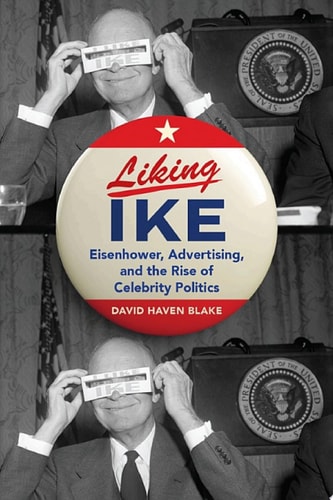
Liking Ike reveals the prominent role that celebrities and advertising agencies played in Dwight Eisenhower's presidency. Guided by Madison Avenue executives and television pioneers, Eisenhower cultivated famous supporters as a way of building the broad-based support that had eluded Republicans for twenty years. While we often think of John F. Kennedy and his Rat Pack entourage as the beginning of presidential glamour in the United States, celebrities from Ethel Merman and Irving Berlin to Jimmy Stewart and Helen Hayes regularly appeared in Eisenhower's campaigns. Ike's political career was so saturated with stardom that opponents from the right and left accused him of being a glamour candidate. Author David Haven Blake tells the story of how Madison Avenue executives strategically brought celebrities into the political process. Based on original interviews and long neglected archival materials, Liking Ike explores the changing dynamics of celebrity politics as Americans adjusted to the television age. By the 1920s, entertainers were routinely drawing publicity to their favorite candidates, but with the rise of television and mass advertising, political advisers began to professionalize the way that celebrities brought attention to presidential campaigns. In meetings, memos, and television scripts, they charted a strategy for leavening political programming with celebrity interviews, musical performances, and elaborate television spectaculars. Commentators worried about the seemingly superficial values that television had introduced to political campaigns, and writers, filmmakers, and fellow politicians criticized the influence of glamour and publicity. But despite these complaints, Eisenhower's legacy would live on in the subsequent careers of John F. Kennedy and Ronald Reagan-and, ultimately, provide a template for the presidential campaigns of Barack Obama, John McCain, Donald Trump, and Hillary Clinton.
Menrva's Summary
THE THESIS
How did the integration of Madison Avenue advertising strategies and celebrity endorsements transform the nature of presidential campaigning during the Eisenhower era? Author David H. Blake examines the professionalization of political communication, arguing that Dwight Eisenhower’s campaigns served as the primary template for modern celebrity-driven politics. By analyzing archival memos, television scripts, and original interviews, the book demonstrates how political advisers intentionally utilized entertainment figures to broaden the Republican party's appeal during the early television age.
THE SCOPE MAP
What You Will Find
- Analysis of the 1952 and 1956 presidential campaign strategies.
- Documentation of the collaboration between advertising executives and political consultants.
- Examination of the role of television in shifting political discourse toward mass-market entertainment.
- Case studies of celebrity involvement, including figures like Irving Berlin and Helen Hayes.
Scope Limits
- The text does not provide a comprehensive biography of Eisenhower’s military career.
- It does not analyze the internal policy debates of the Eisenhower administration beyond their public relations implications.
THE AUTHORITY PERSPECTIVE
Scholars and political historians frequently cite this work as a significant contribution to the study of media influence in American elections. Readers often note the academic rigor of the research while highlighting its accessibility for those interested in the historical origins of contemporary political spectacle.
Page Count:
297
Publication Date:
2016-01-01
Publisher:
Oxford University Press
ISBN-10:
019027820X
ISBN-13:
9780190278205
History
Biography
Celebrities
American History
United States
American Politics
Media Studies
20th Century
Community Tags
Similar Books