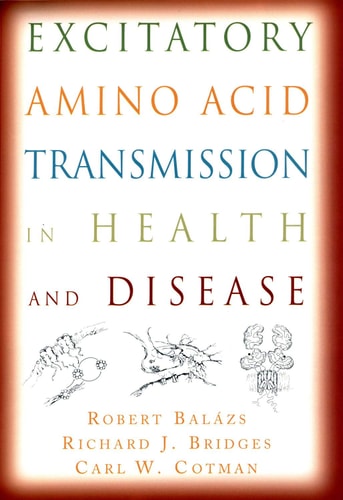
Excitatory Amino Acid Transmission in Health and Disease
0
0
As an Amazon Associate and affiliate partner, Menrva Books earns from qualifying purchases. Learn more
Author Description
Glutamate is the major excitatory neurotransmitter in the mammalian central nervous system (CNS). It regulates normal CNS function, is a major participant in pathology, and serves learning, memory, and higher cognitive functions. The 12 chapters of this book provide the first comprehensive coverage of all the major features of glutamate as excitatory neurotransmitter. The book begins with a valuable historical backdrop. Building from a chapter on the common structure of glutamate receptors, several others cover the major ionotropic receptors, their structure, function, and pharmacology. A follow-up chapter discusses the metabotropic receptors that are directly coupled to second messenger metabolism. A central theme of the book is the capacity of the excitatory amino acid system to contribute to the diverse array of signaling systems in the CNS as a direct result of the large assortment of receptors (including, for the ionotropic receptors, various subunits) the combination of which determine distinct functional properties. A recent development in the field discussed in several chapters is the biochemical characterization of a supermolecular protein complex, the post-synaptic density, that makes the unique structure of excitatory synapses. This complex subserves the experience-dependent modulation of synaptic strength and synaptic plasticity, and gives the synapse the capacity to change dynamically in both structure and receptor composition. Drawing on the individual properties of the receptors, transporters, and functional architecture of the synapse, the concluding chapters describe the functional integration of these components in the more complex physiological processes of plasticity and pathology. Recognition that the regulation of excitatory amino acid receptor activity underlies the pathology of many neurological diseases, including stroke, Alzheimer's disease and schizophrenia, has opened up an exciting frontier that will allow the translation of our understa
Menrva's Summary
THE THESIS
This text investigates the fundamental role of glutamate as the primary excitatory neurotransmitter in the mammalian central nervous system and its dual function in maintaining normal physiology and driving neurological pathology. The authors, led by Carl W. Cotman, synthesize decades of research to provide a comprehensive framework for understanding how receptor diversity, synaptic architecture, and biochemical signaling pathways integrate to facilitate cognitive function and contribute to disease states like Alzheimer's and stroke.
THE SCOPE MAP
What You Will Find
- Detailed analysis of ionotropic and metabotropic glutamate receptor structures and pharmacology.
- Examination of the post-synaptic density as a supermolecular protein complex.
- Discussion of synaptic plasticity and experience-dependent modulation of synaptic strength.
- Clinical correlations linking excitatory amino acid dysregulation to stroke, schizophrenia, and neurodegenerative diseases.
THE AUTHORITY PERSPECTIVE
Experts recognize this work as a foundational reference for understanding the biochemical mechanisms of excitatory neurotransmission. Readers frequently note the academic density of the prose, which serves as a rigorous resource for researchers and advanced students in the neurosciences.
Page Count:
384
Publication Date:
2005-09-28
Publisher:
Oxford University Press
ISBN-10:
0195150023
ISBN-13:
9780195150025
Science
Nervous System
Neurology
Neuroscience
Biology
Amino Acids
Medicine
Drug Receptors
Community Tags
Similar Books












Reader Comments
Share Your Thoughts
No comments yet. Be the first to share your thoughts!