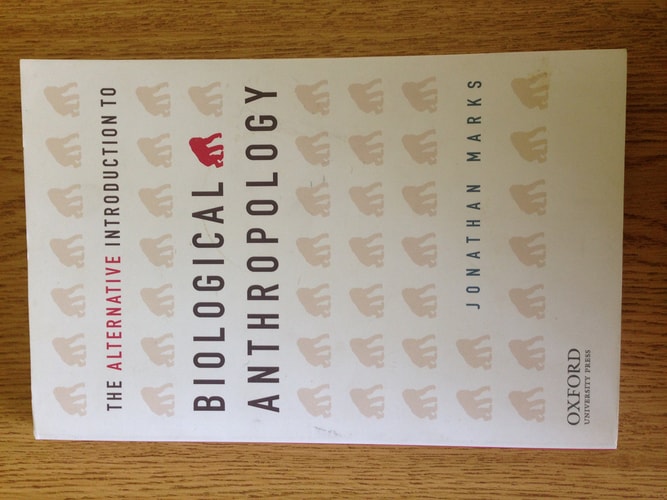
The Alternative Introduction to Biological Anthropology
0
0
As an Amazon Associate and affiliate partner, Menrva Books earns from qualifying purchases. Learn more
Author Description
In The Alternative Introduction to Biological Anthropology, author Jon Marks presents an innovative framework for thinking about the major issues in the field with fourteen original essays designed to correlate to the core chapters in standard textbooks. Each chapter draws on and complements--but does not reconstitute (except for the sake of clarity)--the major data and ideas presented in standard texts. Marks explores such topics as how we make sense of data about our origins, where our modern ideas comes from, our inability to separate natural facts from cultural facts and values as we try to understand ourselves, and the social and political aspects of science as a culturally situated mental activity.Features* Offers clear, intelligent, and completely original discussions-injected with a sense of humor-that will keep students reading* Addresses core topics in a way that does not simply mirror what is in the basic textbooks but offers a new spin, thereby fostering critical thinking* Complements traditional textbooks in biological anthropology and explores connections between biological and general anthropology* Provides expert integration of topics, coherent narratives, and salient examples* Utilizes theme statements at the start of each chapter that introduce the breadth of information covered and engage students in the material
Menrva's Summary
THE THESIS
This work investigates the intersection of biological data and cultural interpretation, questioning how scientists construct knowledge about human origins. Author Jonathan H. Marks, a prominent biological anthropologist, utilizes a series of original essays to challenge the objective neutrality often attributed to scientific inquiry. By examining the social and political contexts of research, he argues that biological anthropology is a culturally situated activity that cannot be fully separated from human values and historical biases.
THE SCOPE MAP
What You Will Find
- Fourteen original essays designed to parallel core chapters in standard biological anthropology textbooks.
- Critical analysis of how data regarding human origins is interpreted and communicated.
- Exploration of the blurred lines between natural facts and cultural values.
- Examination of the social and political dimensions inherent in scientific practice.
THE AUTHORITY PERSPECTIVE
Experts and educators frequently highlight this text as a necessary supplement to traditional, data-heavy textbooks because it encourages students to engage in critical thinking rather than rote memorization. Readers often note the accessible, humorous tone of the prose, which makes complex theoretical discussions approachable for undergraduate students.
Page Count:
304
Publication Date:
2010-11-24
Publisher:
Oxford University Press
ISBN-10:
0195157036
ISBN-13:
9780195157031
Science
Physical Anthropology
Sociology
Education
Biological anthropology
Anthropology
Community Tags
Similar Books