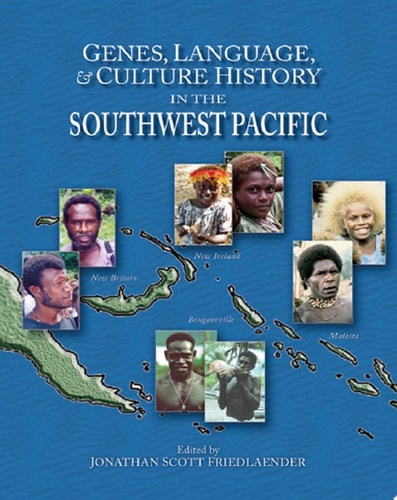
Genes, Language, & Culture History in the Southwest Pacific
0
0
As an Amazon Associate and affiliate partner, Menrva Books earns from qualifying purchases. Learn more
Author Description
The broad arc of islands north of Australia that extends from Indonesia east towards the central Pacific is home to a set of human populations whose concentration of diversity is unequaled elsewhere. Approximately 20% of the worlds languages are spoken here, and the biological and genetic heterogeneity among the groups is extraordinary. Anthropologist W.W. Howells once declared diversity in the region so Protean as to defy analysis. However, this book can now claim considerable success in describing and understanding the origins of the genetic and linguistic variation there.In order to cut through this biological knot, the authors have applied a comprehensive battery of genetic analyses to an intensively sampled set of populations, and have subjected these and complementary linguistic data to a variety of phylogenetic analyses. This has revealed a number of heretofore unknown ancient Pleistocene genetic variants that are only found in these island populations, and has also identified the genetic footprints of more recent migrants from Southeast Asia who were the ancestors of the Polynesians. The book lays out the very complex structure of the variation within and among the islands in this relatively small region, and a number of explanatory models are tested to see which best account for the observed pattern of genetic variation here. The results suggest that a number of commonly used models of evolutionary divergence are overly simple in their assumptions, and that often human diversity has accumulated in very complex ways.
Menrva's Summary
THE THESIS
This work investigates the complex origins of the extraordinary genetic and linguistic diversity found within the island populations of the Southwest Pacific. Anthropologist Jonathan S. Friedlaender and his contributors utilize a comprehensive battery of genetic and phylogenetic analyses to deconstruct the biological and cultural history of the region. By examining both ancient Pleistocene genetic variants and the migration patterns of ancestral Polynesians, the authors challenge existing, overly simplistic models of human evolutionary divergence.
THE SCOPE MAP
What You Will Find
- Genetic data from intensively sampled populations across the Southwest Pacific
- Phylogenetic analyses comparing biological and linguistic variation
- Identification of ancient Pleistocene genetic markers
- Evidence of migration patterns from Southeast Asia
Scope Limits
- The analysis is geographically restricted to the islands north of Australia extending toward the central Pacific
- The study does not provide a general overview of global human evolution outside of this specific regional context
THE AUTHORITY PERSPECTIVE
Experts recognize this volume as a significant contribution to the study of human population genetics in the Pacific region. Readers frequently note the technical density of the phylogenetic data, which serves as a specialized resource for researchers in anthropology and evolutionary biology.
Page Count:
260
Publication Date:
2007-01-01
Publisher:
Oxford University Press
ISBN-10:
0190293675
ISBN-13:
9780190293673
Science
History
Cultural Anthropology
Anthropology
Genetics
Linguistics
Special Topics
Community Tags
Similar Books