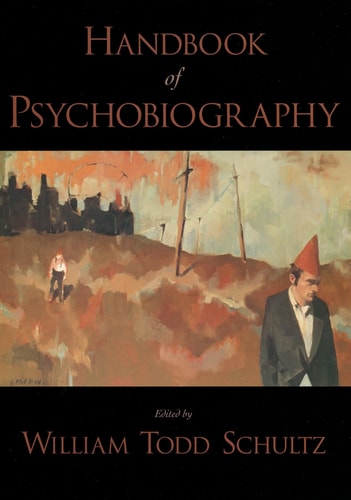
Handbook of Psychobiography
0
0
As an Amazon Associate and affiliate partner, Menrva Books earns from qualifying purchases. Learn more
Author Description
This exceptionally readable and down-to-earth handbook is destined to become the definitive guide to psychobiographical research, the application of psychological theory and research to individual lives of historical importance. It brings together for the first time the world's leading psychobiographers, writing lucidly on many of the major figures of our age - from Osama Bin Laden to Elvis Presley. The first section of the book addresses the subject of how to construct an effective psychobiography. Editor William Todd Schultz introduces the field, provides valuable definitions of good and bad psychobiography, discusses an optimal structure for biographical data. Dan McAdams explores the question of what psychobiographers might learn from current research in personality psychology. Alan Elms delivers wise advice on the tricky subject of theory choice in psychobiography. William Runyan asks why Van Gogh cut off his ear, and in the process explains how one evaluates competinginterpretations of the same event in a subject's life. And Kate Isaacson describes a template for use in multiple-case psychobiography. Never before has method in psychobiography been so clearly and explicitly addressed. Those just getting started in the field will find in Section One a detailed roadmap for success. The remaining sections of the book are composed of richly engaging case studies of famous artists, psychologists, and politicians. They address compelling questions such as: What are the subjective origins of photographer Diane Arbus's obsession with freaks? In what ways did the early loss of Sylvia Plath's father affect her poetry and presage her suicide? Out of what painful life experience did James Barrie drive himself to invent Peter Pan? Why did Elvis experience such difficulty singing the song "Are You Lonesome Tonight?" What accounts for Bin Laden's radicalism, Kim Jong Il's paranoia, George W. Bush's conflict with identity? Why did Freud go so disastrouslyastray in his analysis
Menrva's Summary
THE THESIS
This volume investigates the methodological rigor and theoretical frameworks required to conduct effective psychobiographical research on historically significant individuals. Editor William Todd Schultz, alongside a cohort of leading scholars, establishes a systematic approach to applying psychological theory to the lives of notable figures. The text synthesizes personality psychology, biographical data analysis, and interpretive strategies to provide a structured roadmap for both novice and experienced researchers.
THE SCOPE MAP
What You Will Find
- Methodological frameworks for constructing individual and multiple-case psychobiographies.
- Theoretical guidance on selecting appropriate psychological models for biographical analysis.
- Case studies examining figures such as Diane Arbus, Sylvia Plath, James Barrie, and various political leaders.
- Analytical techniques for evaluating competing interpretations of historical events and personal life experiences.
THE AUTHORITY PERSPECTIVE
Experts identify this work as a foundational text for those entering the field of psychobiography due to its clear articulation of research standards. Readers frequently note the balance between academic rigor and the accessible, engaging nature of the provided case studies.
Page Count:
380
Publication Date:
2005-07-07
Publisher:
Oxford University Press
ISBN-10:
0195168275
ISBN-13:
9780195168273
Biography
Psychology
Non-Fiction
Artists psychology
Personality Psychology
Biographical Methods
Research Methods
Community Tags
Other Editions(3)

Similar Books


Reader Comments
Share Your Thoughts
No comments yet. Be the first to share your thoughts!