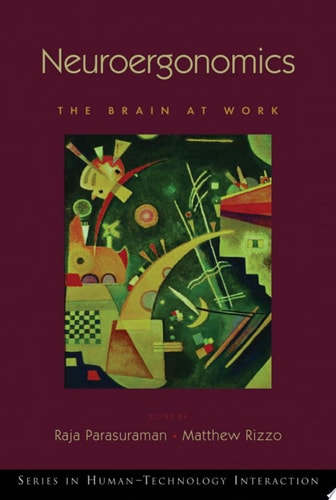
Neuroergonomics: The Brain at Work
0
0
As an Amazon Associate and affiliate partner, Menrva Books earns from qualifying purchases. Learn more
Author Description
Neuroergonomics can be defined as the study of brain and behavior at work. It combines two disciplines--neuroscience, the study of brain function, and human factors, the study of how to match technology with the capabilities and limitations of people so they can work effectively and safely. The goal of merging these two fields is to use the startling discoveries of human brain and physiological functioning both to inform the design of technologies in the workplace and home, and to provide new training methods that enhance performance, expand capabilities, and opitimize the fit between people and technology. Research in the area of neuroergonomics has blossomed in recent years with the emergence of noninvasive techniques for monitoring human brain function that cna be used to study various aspects of human behavior in relation to technology and work, including mental workload, visual attention, working memory, motor control, human-automation interaction, and adaptive automation. This volume will provide the first systematic overview of this emerging area, describing the theoretical background, basic research, major methods, as well as the new and future areas of application. This collection will benefit a number of readers: the experienced researcher investigating related questions in human factors and cognitive neuroscience, the student wishing to get a rapid but systematic overview of the field, and the designer interested in novel approaches and new ideas for application. Researchers in human factors and ergonomics, neuroscience, cognitive psychology, medicine, industrial engineering, and computer science will find this volume most helpful.
Menrva's Summary
THE THESIS
This volume investigates the intersection of neuroscience and human factors to determine how brain function can inform the design of technology and optimize human performance in the workplace. Authors Matthew Rizzo and Raja Parasuraman synthesize foundational research from cognitive neuroscience and industrial engineering to establish a systematic framework for neuroergonomics. By examining how noninvasive brain monitoring techniques apply to real-world tasks, the text argues that understanding physiological limitations is essential for creating safer, more efficient human-technology interactions. The authors provide a comprehensive overview of theoretical backgrounds and practical applications for both researchers and practitioners.
THE SCOPE MAP
What You Will Find
- Theoretical foundations connecting neuroscience with human factors engineering
- Methodologies for monitoring brain function in non-laboratory, real-world environments
- Analysis of mental workload, visual attention, and working memory in relation to automation
- Applications for adaptive automation and human-machine interface design
- Case studies on optimizing the fit between human capabilities and technological systems
THE AUTHORITY PERSPECTIVE
Experts identify this volume as a foundational text for those entering the field of neuroergonomics, offering a structured overview of the discipline's primary research areas. Readers frequently note the academic density of the prose, which serves as a comprehensive reference for professionals in medicine, engineering, and cognitive psychology.
Page Count:
464
Publication Date:
2006-11-16
Publisher:
Oxford University Press
ISBN-10:
0195177614
ISBN-13:
9780195177619
Science
Psychology
Brain
Technology
Neuroscience
Engineering
Ergonomics