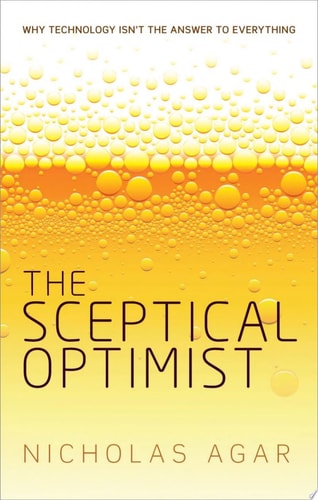
The Sceptical Optimist
0
0
As an Amazon Associate and affiliate partner, Menrva Books earns from qualifying purchases. Learn more
Author Description
The Rapid Developments In Technologies — Especially Computing And The Advent Of Many 'smart' Devices, As Well As Rapid And Perpetual Communication Via The Internet — Has Led To A Frequently Voiced View Which Nicholas Agar Describes As 'radical Optimism'. Radical Optimists Claim That Accelerating Technical Progress Will Soon End Poverty, Disease, And Ignorance, And Improve Our Happiness And Well-being. Agar Disputes The Claim That Technological Progress Will Automatically Produce Great Improvements In Subjective Well-being. He Argues That Radical Optimism 'assigns To Technological Progress An Undeserved Pre-eminence Among All The Goals Pursued By Our Civilization'. Instead, Agar Uses The Most Recent Psychological Studies About Human Perceptions Of Well-being To Create A Realistic Model Of The Impact Technology Will Have. Although He Accepts That Technological Advance Does Produce Benefits, He Insists That These Are Significantly Less Than Those Proposed By The Radical Optimists, And Aspects Of Such Progress Can Also Pose A Threat To Values Such As Social Justice And Our Relationship With Nature, While Problems Such As Poverty Cannot Be Understood In Technological Terms. He Concludes By Arguing That A More Realistic Assessment Of The Benefits That Technological Advance Can Bring Will Allow Us To Better Manage Its Risks In Future.
Menrva's Summary
THE THESIS
Does rapid technological progress inevitably lead to a significant increase in human well-being and the resolution of global societal challenges? Nicholas Agar, a professor of ethics, examines the claims of 'radical optimists' who believe technology will soon eradicate poverty, disease, and ignorance. By synthesizing recent psychological research on subjective well-being with ethical analysis, Agar argues that technological advancement is often overstated as a primary driver of human happiness and social improvement.
THE SCOPE MAP
What You Will Find
- Analysis of the 'radical optimism' movement regarding technological acceleration
- Psychological frameworks for measuring subjective well-being
- Ethical critiques of prioritizing technological progress over social justice and environmental values
Scope Limits
- The book does not provide a technical manual for specific emerging technologies
- It does not offer a comprehensive policy roadmap for government regulation of the tech industry
THE AUTHORITY PERSPECTIVE
Critics and scholars often note that Agar provides a necessary, measured counter-narrative to the prevailing techno-utopian discourse. Readers frequently highlight the accessibility of his philosophical arguments, which translate complex psychological studies into a coherent critique of modern technological expectations.
Page Count:
256
Publication Date:
2015-01-01
Publisher:
Oup Oxford
ISBN-10:
0191026611
ISBN-13:
9780191026614
Philosophy
Non-Fiction
Psychology
Technology
Sociology
Community Tags
Similar Books