Greek Sculpture: The Archaic Period: A Handbook
0
0
As an Amazon Associate and affiliate partner, Menrva Books earns from qualifying purchases. Learn more
Author Description
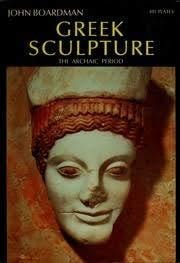
For most people there is no more satisfying expression of Greek art than its sculpture. It was the first, the only ancient art to break free from conceptual conventions for representing men and animals, and to explore consciously how art might imitate or even improve upon it. The first stages of this discovery, from the semi-abstract beginnings in the eighth century BC to the more representational art of the early fifth century, are explored and illustrated in this handbook.
Menrva's Summary
THE THESIS
This handbook investigates the stylistic and conceptual evolution of Greek sculpture during the Archaic period, specifically examining how artists transitioned from abstract forms to representational realism. John Boardman, a renowned scholar in classical archaeology, utilizes his extensive expertise to analyze the technical advancements and cultural shifts that defined this era. The text provides a structured framework for understanding the progression of Greek art from the eighth century BC through the early fifth century BC, focusing on the movement toward imitating and refining the human form.
THE SCOPE MAP
What You Will Find
- Chronological analysis of sculptural development from the eighth to the early fifth century BC
- Examination of the transition from conceptual, semi-abstract figures to naturalistic representation
- Detailed discussion of technical innovations in stone carving and bronze casting
- Extensive photographic documentation and illustrative plates of key archaeological finds
THE AUTHORITY PERSPECTIVE
Experts frequently cite this work as a foundational text for students and enthusiasts of classical art history due to its clear, concise synthesis of complex archaeological data. Readers often note the academic density of the prose, which remains accessible while providing a rigorous overview of the period's stylistic shifts.
Page Count:
252
Publication Date:
1978-01-01
Publisher:
Oxford University Press
ISBN-10:
0195200462
ISBN-13:
9780195200461
Archaeology
Ancient History
Sculpture
Art History
Community Tags
Similar Books